Showing posts with label Indie. Show all posts

Friday, April 8, 2011

Dialing Back in Time with Digital: A Love Story

digital a love storyDo you remember your first time on the Internet? Was it on AOL? Did you dig through keywords and other nonsense until you found an IRC client?

What kind of computer did you use? Was it an IBM? Your dad’s old Apple?

Were you actually allowed on the Internet? Did you stay up way later than you should have, covering your modem with a blanket so the blaring noises of the Future wouldn’t wake anyone up?

Christine Love’s 2010 indie title Digital: A Love Story weaves together technonostalgia and point-and-click adventure gameplay into a unique, touching piece of interactive fiction.

Continue...

Tuesday, February 22, 2011

Dig on the Go with Official Minecraft for iOS and Android

MinecraftServer060809If, however irrationally, the barrier to you playing Minecraft has been that it wasn’t on your phone, you no longer have an excuse. Creator Markus Persson told Gamasutra yesterday that his studio Mojang is currently working on an official iPhone/iPad port for the colossal indie hit. Kotaku then reported that an Android version is also in the works.

Minecraft’s success has allowed Persson to gradually expand his team to include folks like Aron Neiminen, who will head up the smartphone port. The larger team enables Persson to develop and then implement features he omitted from Minecraft’s Alpha release. Just yesterday, he tweeted about the team’s plans for a “food meter,” which would presumably require adventuring miners to consume those hams they’ve collected instead of stockpiling them as health items. The iOS/Android version may not see all these updates, however, as Persson’s team is committed to only including features that “make sense” for the platform.

Persson can make big changes like this because Minecraft is still technically in Beta. There’s a chance that – with added goals, a more defined structure and other survival systems – the game plays quite differently six to twelve months from now. When I “reviewed” Minecraft a few months ago, I expressed concerns that “there may come a time when Persson’s creativity sullies Minecraft’s raw potential for fun.”

No word on pricing or anything like that, which leads me to believe it will be a free app that lets you purchase a license for the game through www.minecraft.net like everyone else. Then you will be free to spend your commute mining to your heart’s content.

[via Gamasutra]

Continue...

Friday, January 21, 2011

Rolling Around in the Night Sky

nightskyWhen was the last time you played a game starring a sphere? No princes, no monkeys. Just a plain little orb. I have to think back all the way to Marble Madness, though of course I could be forgetting something.

For some reason, Night Sky just so happens to star a sphere. Basing a game around a nondescript orb seems like an odd choice, but I’m glad indie developer Nifflas (Nicklas Nygren) did. Its blend of physics puzzles and roly-poly platforming makes for one of the more unique and relaxing games I’ve played in some time.

Continue...

Monday, December 13, 2010

PSA: Minecraft About To Enter Beta, Buy Now

minecraft_my_house_snowDid you listen when I said you should get Minecraft?  If you were, this isn’t for you.  If you weren’t, read on.

The gaming blogosphere simply won’t shut up about Minecraft – and with good reason.  It’s got a lot of things going for it.  It’s a smash indie success.  It’s a veritable sandbox of emergent game design.  Its multiplayer mode might as well be titled “Schadenfreude.”  Oh yeah, and it’s sold nearly a million copies.

One of Minecraft’s biggest allures is the current Alpha state.  Developer Markus Persson promised anyone who bought the game in Alpha (at a reduced price) would receive all future updates to the game for free.  That’s around thirteen or fourteen bucks (after conversion) for a lifetime subscription to a game that currently knows no bounds. 

Here’s the catch: Minecraft enters Beta on December 20th.  What does this mean?  The price rises to 14.95 Euro (closer to twenty bucks), and Persson (or notch) will be adding better mod support, some loose narrative pieces to encourage early- and late-game play, and a larger focus on testing and stability. 

The biggest change has nothing to do with gameplay: the “All future versions free” promise does not apply to purchase made after launch of the Beta version.  According to his Twitter, “it scares both the lawyers and the board” (he has a board!).  Beta customers will still get the “final” release for free, but additional expansions will cost money.

If you still want in on the (hella crowded) ground floor of Minecraft, you have a week.  Go.

Continue...

Sunday, November 21, 2010

Sunday Reading: The Hipster in the Mirror

HipsterThe hipster.  Is there a more universally-derided yet barely definable term? It’s easy to say, “Oh you wear oversized glasses and skinny jeans, so you’re a hipster” or “Get your six-pack of PBR and your Sufjan vinyls off my porch, hipster!”  But are these people automatically hipsters?  Or is it a self-fulfilling thing?  Are hipsters only hipsters because we dub them so?

And why do we take the time and effort to label them as such?  Why do we scoff at their style, their music, their beards?  It’s their taste versus yours.  Should it really provoke such ire?

Mark Greif recently posed these questions in a New York Times essay entitled “The Hipster in the Mirror.”  What excited Greif more than the actual responses to a survey conducted about hipster was the trepidation and anxiety with which people participated at all:

“When we announced a public debate on hipsterism, I received e-mail messages both furious and plaintive. Normally inquisitive people protested that there could be no answer and no definition. Maybe hipsters didn’t exist! The responses were more impassioned than those we’d had in our discussions on health care, young conservatives and feminism. And perfectly blameless individuals began flagellating themselves: ‘Am I a hipster?’”

He sees the hipster rage as a sort of territorial battle, flamed by various socioeconomic conditions and perceptions similar to those outlined in Pierre Bourdieu’s 1979 book Distinction: A Social Critique of the Judgement of Taste.  Greif claims that “Bourdieu’s innovation, applicable here, was to look beyond the traditional trappings of rich or poor to see battles of symbols (like [hipster] boots and hats) traversing all society, reinforcing the class structure just as money did.”

Bourdieu’s deconstruction of twentieth-century French tastes and stereotypes aligns pretty well with the current “What’s the deal with hipsters?” conversation.  But why does the conversation exist at all?  Writes Greif: “The attempt to analyze the hipster provokes such universal anxiety because it calls everyone’s bluff.”

I hate it when people force me to confront flaws in my worldview.  I hate it because they’re usually right.

Continue...

Friday, November 12, 2010

Sufjan Stevens: Concert Review and a Meditation on the Audience

Last Sunday, I saw Sufjan Stevens in concert in Asheville, North Carolina. It was a capstone to my week of Sufjan, though unfortunately it came too late for me to feature it in my write-up. The concert did, however, leave me with a lot to think about, both in terms of Stevens' new album, and in terms of his audience. 

Our friend Colleen recently wrote about the affinity that hipsters have for Sufjan. Well, Asheville is some sort of mountain-hipster-Mecca, resplendent with pretentious coffee shops, second-hand bookstores, and scores of the most unkempt beards that I have ever seen. The air smelt of incense and unfiltered cigarettes. When my Concert Companion and I stopped a resident to ask about a good place to get some food, he automatically assumed that we were vegetarians. In short, the hipster to non-hipster ratio was higher than I've ever seen, and dense enough to be somewhat frightening. 

We waded through the sea of plaid-shirts and knit caps to find our seats. Despite the fact that Stevens wore those stupid fairy wings while playing the opening number ("Seven Swans"), the concert got off to a good start. The material was mostly from his new album, The Age of Adz, but the large accompanying band up on stage helped make the arrangements a lot of fun.

Continue...

Friday, October 22, 2010

Minecraft, Striking the Alpha Lode

minecraftSometimes reviewing a game is a piece of cake":  “Space Marine Shooter X rehashes all the worst elements of better games,” or “Niche Downloadable Title Y turns a tried-and-true genre on its head and offers enough unique modes to bring you back for me.”  It’s a success or a failure.  End of story.

Occasionally, it’s a bit tougher.  Hype plays a huge role in game coverage – I’ll go out on a limb and say that hardcore gamers are subjected to more opinion-clouding hype than dedicated fans of any medium (excerpt perhaps art collectors) – such a huge role, in fact, that it becomes difficult to separate your initial impressions of/hopes for a game from the actual game you’re playing.  I struggled to check my fanboy at the door when we ran our Starcraft II review, and I tried desperately to find something good to say about Divinity II: Ego Draconis despite hearing much to the contrary before I popped it in.

Items (products, games, art, etc.) under review always deserve a fair shake.  People pour their hearts (or at least hours of their lives) into things, only to have armchair designers critique each and every choice they made. 

But what about unfinished products?  How do you review games that aren’t even in beta yet, despite having sold hundreds of thousands of copies? 

Of course, I’m talking about Minecraft.

Continue...

Friday, July 23, 2010

Limbo - A Boy, A Forest, and Many Many Deaths

LIMBO XBLA Box Art I went into the woods because I wished to live deliberately, to front only the essential facts of life, and see if I could not learn what it had to teach, and not, when I came to die, discover that I had not lived. – Henry David Thoreau

Playdead’s puzzle-platformer Limbo debuted at this year’s Independent Games Festival, taking home awards for “Technical Excellence” and “Excellence in Visual Art.”  Upon playing the game, people went bonkers.  When a game gets this much acclaim early, it’s as if it were developed with an “Attach Hype Here” sign on the back. 

Such is the perpetual quandary of indie titles.  How do you balance your marketing strategy with potential overhyping?  You need people to spread the word about your game, but the last thing anyone wants to do is fail to meet expectations.

Limbo doesn’t just exceed its hype.  It smashes it, chews it up, spits it out, rips it apart, and disembowels it without mercy.

The game is nothing if not spare.  You control a boy who wakes up in the woods.  There’s no heads-up display, no dialogue, no quest text to tell you what to do.  A glance at the game’s description in the Xbox Live Marketplace intimates that the boy’s searching for his sister.  The title suggests he’s searching for her in some sort of dream or afterlife.  All Limbo wants you to know is that the boy’s in the woods and there’s a button for jumping and a button to move objects.

Limbo also wants you to know that the boy will die – often.  Spiders, spikes, deep water, fire: these are just some of the hazards you can look forward to steering the boy around.  The title screen warns that some of the death animations may be disturbing.  There’s no “may be” about it.  I’m still haunted by the time a giant spider wore the boy’s body as a glove.  A gore filter is provided that minimizes some of the shock value, but that undercuts the title’s disquieting nature.  RUNNNNNNN!Much of what sets this game apart from its peers is that pervasive sense of vulnerability.  There’s no character progression.  There are no perks, no power-ups.  Run, use your environment, or perish; these are your only options.  And some perishing is unavoidable.  You can only learn to avoid some traps by discovering them through a grisly death.  However, tight, reliable controls and a munificent checkpoint system nip any “I wish I’d stop dying” frustrations in the bud.  The boy, whose particular sense of momentum and ability to jump feel wholly unique, controls precisely and predictably.  Any time I cried “Boy!” while watching him die yet again, it was not because I was frustrated with how he responded to my commands.  It was because I knew I’d failed him.

Not all of the puzzles, however, focus on the boy’s death.  Some will wrack your brain until its death.  Others may send you crying to forums desperate for some help.  These stumpers are doled out judiciously, slowing the game’s pace whenever it’s in danger of becoming a child-murdering spree.  How a game this small does so much to establish pace and mood floors me. As I said, Limbo is artistically economical, especially in its visual aesthetic.  Despite the game being entirely in silhouette and grayscale, I found myself marveling at elements more commonly hailed in less monochromatic games – for example, the way light pours through cracks in the forest and the flow of water in the caves.  The black, gray, and grayer color palette also removes a certain level of specificity from the boy and his environments.  This serves a dual purpose.  It enables the player to project their own feelings of dread or anxiety onto the boy, whose face is defined only by two white eyes that blink out upon his death, and allows the developers to hide threats in the shadows.  Exploration generally has no place in such a linear game, but the stark visuals beg the player to explore with his or her eyes, to find the path or the solution in the beautiful near-darkness.

You will be doing Limbo a disservice if you do not play with a serious pair of headphones or some form of surround sound.  The ambient soundscape features no music, only audio cues that alert you to changes in tone or incoming danger.  Silence alternates with the sound of the boy walking, which then mingles with the world’s looming background hum.  Never have I been so unnerved by a game in two dimensions, and Limbo’s stomach-rumbling atmosphere played a huge part in that.

Who is that? So it’s an indie puzzle-platformer that fulfill its artistic aspirations, but just what then is its message?, I’m sure you’re wondering.  Playdead’s coy about that.  At its core, Limbo is about solving puzzles and overcoming obstacles to move forward on a quest for companionship.  There’s no effusive text to attach a metaphor to each new mechanic (see Braid).  There’s no text crawl at the beginning or the somber end to summarize the story.  The boy starts in the woods.  He encounters other boys.  He goes into some caves, navigates an industrial complex, and attempts to save himself from certain doom in a variety of other environments, none of which repeat.  And to explain some of the puzzles in greater detail would ruin any potential satisfaction you might derive from solving them.  You will get from Limbo what you’re willing to put in – and then some.

The only issue I have with Limbo is its brevity.  I would love more, but I think that might dilute an otherwise amazing experience.  Just don’t look at $15 price tag as a reason not to purchase Limbo, or I’d like to send you into the woods to be devoured by a giant spider.  I’ve spent more on meals that I forgot ten minutes later.  And I’ll be remembering Limbo – its environments, its loneliness, its danger – for years to come.

Playdead’s Limbo is available for 1200 Microsoft Points ($15) on Xbox Live as part of the Summer of Arcade promotion.  The developer provided Charge Shot!!! with a copy for the purposes of this review.

Continue...

Monday, July 5, 2010

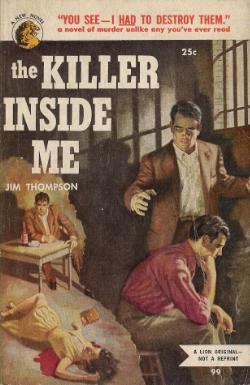
Movie Review: the Killer Inside Me

The other day, my girlfriend texted me. I didn't receive the text when it was sent because I had my phone turned off (that's right, not silenced, off like it should be) because I was in a movie theater. When I told her I had just been out at the movies, she asked what I had seen that night. "If you saw Eclipse before I did I'll be pissed," she said, half joking. I responded that I had seen a film that was probably the polar opposite of anything Twilight-related*: Michael Winterbottom's the Killer Inside Me.

The Killer Inside Me premiered at Sundance earlier this year and earned both praise and condemnation for its graphic sex and violence, most of which is targeted at its two female stars Jessica Alba and Kate Hudson. Director Winterbottom has made a very unsettling film, perhaps not so much as fellow IFC pickup Antichrist but one that caused its fair share of queasiness on the part of the author as well as at least one walk-out at the packed Manhattan showing.

The trick with films like this one that desire to tell a story about violence in a serious way is to make sure that it doesn't become gratuitous, pornographic even. There's also the matter of making what's shown is effective, so as not to violate the oft-mentioned rule that offscreen murders are more terrifying that one's shown up close. Of the many murders in the Killer Inside Me, only one is mentioned and not shown in graphic detail and Winterbottom makes that act of witnessing brutality go a long way.

Casey Affleck (how long has it been since we no longer have to mention that he's Ben Affleck's brother?) stars as Lou Ford, a West Texas deputy sheriff. Ford is a respected member of his oil boom town's community, normally quiet and reserved and a responsible and trustworthy law enforcement figure. But inside him, there's a killer. For reasons hinted at in flashbacks and interior monologues, Ford is a violent sociopath. He begins a sadomasochistic relationship with a prostitute (Alba) whilst carrying on with his girlfriend (Hudson) and soon enough, it becomes harder and harder to conceal his "sickness" and he's knee deep in a series of murders.

Based on a pulp novel by Jim Thompson, Killer Inside Me wears its noir credentials on its sleeve. You've got your voiceover narration from the protagonist, your titilating sex, your femme fatale, and corrupt small town politics. The twist being of course that instead of the cop or detective, the killer is the protagonist. And of course, all along Ford is technically trying to catch himself. Seeing him have to do more and more to cover up his secret is a real thrill, knowing that at any minute the house of cards could come tumbling down and he could snap, revealing his terrible secret.

Affleck has the noir angle down pat. If you haven't seen him as the private eye main character inGone Baby Gone, do so immediately. He trades in the streetsmart swagger of his character in that film for a "Gee shucks, miss" veneer of innocence in this one. If one could hide the title and plot of this movie from someone before showing it to them, they might never see what's coming. Of course, it gets bloody real quick so this really wouldn't be worth it, and chances are tricking someone into seeing a movie which features both of its major female characters suffer vicious beatings at the hand of its protagonist will lose you friends real quick.

That brings us of course to the violence. By choosing to show us the brutal, disturbing acts Ford visits upon his victims, Winterbottom makes it all the worse. Knowing that Affleck's character murders people in such savage ways is one thing, but when it's show point-blank to the audience it becomes truly awful. I think comparisons can be made to American Psycho, another film about an unlikely serial killer, but Killer Inside Me lacks the dark humor that makes Patrick Bateman's story so remarkable. I keep wanting to come back to Bret Easton Ellis' blood-soaked Wall Street and revisit his yuppie serial killer, but I think one session with the Killer Inside Me is enough for now. It's just too dark to bear.

Final verdict: 51 Congos

*I say this with trepidation because I think that even showing women brutalized as helpless victims of a serial killer is more empowering than as passive birthing vessels in a Mormon abstinence PSA. I know which film I'd rather show my daughter.

Continue...

Monday, June 14, 2010

Freeman, Eufloria, and Transmedia – Chatting With Rudolf Kremers

freeman Eufloria creator Rudolf Kremers likes to keep himself busy – when he’s not working on Freeman, his next major game project, he’s working on ventures into “transmedia,” or helping Alex May port Eufloria to the Playstation 3. We talked a little with Rudolf via email to get some more information on his latest projects.

On Freeman

Kremers is keeping the specifics of his next game close to his chest, but he was willing to divulge some details.

“The idea of Freeman is that it is an ode to classic sci-fi and the beauty of scientific exploration, in the guise of an indie game,” says Kremers. The exploration theme works on many levels – you’ll physically explore your environment, but you’ll also explore your place in the narrative and the game mechanics themselves, “as well as on other levels that I am not ready to share yet,” says Kremers.

Fans who have been paying attention will notice that Freeman is the first name of physicist Freeman Dyson, whose surname was Eufloria’s original title. When asked about this, Kremers said that the games shared no overt connection. More than that, he wouldn’t say – just that we should expect Freeman sometime in 2011, and that we can expect a better look at the game not more than “a few months” from now.

On going “transmedia”

Kremers did tell us that he had aspirations for Freeman beyond the game itself – something that he calls a “transmedia approach.”

“The game is set in a sci-fi universe that I have been working on for a while, and I decided that I really want to explore this universe further through other media projects as well. As it stands I am planning a graphic novel and investigating a cinematic exploration of sorts.” Basically, Kremers wants Freeman to be just a piece of a larger narrative puzzle.

“The reasons why I think Freeman can be at the centre of a transmedia approach are mainly to do with the fact that the project touches on so many of my permanent interests, and I would be exploring them in one way or another anyway. After some advice from a friend I realized that I may as well develop this new IP as a coherent universe in which various creative efforts can find a home, and that way support and strengthen each other. For example, I recently re-evaluated my other comic project "Spire" and found that it would fit absolutely perfectly in the Freeman universe. So with some minor alterations that project can be added to the whole transmedia approach.”

On Eufloria and the Playstation Network

Eufloria_ScreenShot_5_thumb[15] Lastly, we talked once again with Kremers about his and Alex May’s superb Eufloria (read our review, our first interview, and our follow-up interview), which is coming to the Playstation 3 via the Playstation Network in early 2011. Why the Playstation Network? Simply put, greater creative freedom.

“[The Playstation Network] is the only natural place for the game really as a WiiWare version stranded early after Nintendo approached us at the IGF (they don't like that we work from a home office) and Microsoft put so many extra demands on an XBLA port that it would be both too much a financial risk as well as introduce things in gameplay terms we are not that interested in. Sony on the other hand have been genuinely enthusiastic, and have shown to be very welcoming to the indie approach we bring to the table. We agreed on the direction of the game, both in terms of scope and creative content, which was also crucial. We also think that PSN audience would welcome a game like this. So in short, it makes sense for us to do it this way.”

While Kremers has not announced plans to bring Freeman or any other project to game consoles as of this writing, he says that it’s certainly not out of the question. “At least I expect this to be the case,” he said.

Continue...

Thursday, May 13, 2010

Movie Review: Eddie Lebron’s Mega Man Fan Film

megaman When watching a fan-made film, several things are given:

1) The actors may not be all that great.

2) The production values may not be all that great.

3) The special effects may not be all that great.

4) The script may not be all that great.

5) The editing may not be all that great.

The list goes on. The true allure of the fan film lies not in its execution, necessarily, but in its moxie, its willingness to exist, even though its target audience is doomed to be small and it will only ever be shown for free on ScrewAttack.com next to some truly hideous new Pokémon. It’s like fan fiction, except it requires some true effort on the part of the creator.

Oh, I’m sorry, did you not know what I was talking about?

A little while ago, Craig wrote a post about game developer Capcom’s apparent willingness to allow its fans a certain amount of creative freedom with some of their intellectual property – one of his main inspirations was Eddie Lebron’s forthcoming Mega Man fan film. Well, that film is no longer forthcoming. It done forthcame. And this past weekend, I watched it.

I went into this with all of the above caveats firmly in mind – I wasn’t in for Citizen Kane here, or even National Treasure. I was watching a fan-made film about Mega Man, and I was watching it because I liked Mega Man at least as much as this guy does.

Thus, I don’t feel super comfortable judging the movie by the same criteria I would a Major Motion Picture. For example, I am fully aware that Lebron does not have access to top-dollar props, which would explain why characters often perform minor miracles on what appears to be mid-to-late-nineties-vintage computer equipment. I understand that he doesn’t have access to dozens of programmers or an advanced render farm, which would explain why the CGI generally falls somewhere between an episode of ReBoot and that 3D “Treehouse of Horror” episode from 1995. These things are, perhaps, inevitable, and can be forgiven.

A little harder to overlook is the acting, the script and especially, especially the editing.

First, the plot: In the year 20XX, a fellow by the name of Dr. Thomas Light has designed half a dozen robots, designed to make human life easier by doing a bunch of our dirty work. However, disgruntled and marginalized partner Dr. Albert Wily one day decides to snap, reprogramming the robots and using them to pound the world into submission. One of Dr. Light’s household helper-bots, Rock, is upgraded to become Mega Man, and Mega Man goes and sets the world aright.

If this sounds familiar at all, it’s because this is the basic plot that, like, every one of the Mega Man games has used. Given that Lebron’s source material is a mid-1980s NES game, his script is decent – it fleshes out the Mega Man universe without really violating the existing continuity.

That being said, the treatment is not without its problems. For example, I’m not entirely convinced that Mega needed to tell every one of the six Robot Masters that he did not want to hurt them before blowing them the hell up, but that’s what he does. Dr. Light isn’t so much a character as he is an exposition dispenser, and whenever the guy opens his mouth you can be sure that he’s about to deliver a paragraph of information explaining the situation at hand. There are Problems.

Light (Edward Young) is actually the weakest actor in the stable too, delivering most of his lines with what I can only describe as a sort of benevolent, disaffected smugness – he’s not bad, but he can only really hit the one note. The rest of the acting is firmly in okay-not-great territory, ranging from Light’s stiltedness to Wily’s (Dave Maulbeck) mostly enjoyable scene-chewing.

These are all issues, but the thing the Mega Man film needs most is a visit from a good editor. Most of the shots have a way of lingering just a second or two longer than strictly necessary, and shaving these awkward seconds off would go a long way toward infusing a greater sense of momentum into the proceedings. The beginning of the movie (basically, anything that happens before Rock becomes Mega Man and starts blowing things up) could also stand to shed ten or fifteen minutes – it really drags its feet, and while the concept of a robot seeking his purpose is interesting, it doesn’t really film well for very long.

As I said, it can be difficult to judge a movie like Eddie Lebron’s Mega Man, mostly because many of my criticisms are unavoidable given the financial constraints and the indie nature of the movie. I wouldn’t necessarily recommend it as a shining example of independent filmmaking, but it is perfectly watchable from beginning to end, and it’s still leagues better than the Super Mario Bros. movie. A good edit could provide a much-needed bit of polish to the film, and bring it firmly into “entertaining way for Mega Man fans to blow an hour and a half” territory.

Continue...

Sunday, May 9, 2010

An Artist Apart – A Talk with Jason Rohrer

JasonRohrer_March4_2008 Last Friday, Rob, Craig and I had the opportunity to sit down and chat with indie game programmer Jason Rohrer over Skype. We were quite chuffed, as you might imagine.

Long-time readers of the site will remember Jason from Craig’s piece about Passage, written during the very first week of this humble enterprise’s existence. Less long-time readers might recall our full review of Sleep is Death, which we ran just a few weeks ago, and those of you who are, um, between those two extremes may remember our piece on his first multiplayer game, Between. Obviously, Rohrer’s games have had a lasting impact on us, and that sentiment holds true for game writers and critics throughout the industry.

We cover a lot of ground in our 45-minute talk with Jason – we opened with Sleep is Death, which got him talking about the limitations of single-player games and his original vision for the title. Next, he discussed his upcoming Nintendo DS game, Diamond Trust of London, the challenges and advantages of developing every one of his games with no outside help, and some of the quirks of the DS. Finally, we asked him to weigh in on the great Games as Art debate – I don’t think any of us were expecting him to agree with Roger Ebert’s points, but Rohrer is nothing if not expectation-defying.

There’s nothing else that needs to be said. Read on after the jump to get a look into the mind of one of our very favorite indie developers.

Sleep is Death

sleepisdeath[11] Rohrer's newest game, Sleep is Death (see our review), looks larger on paper than any of his previous projects. It's a multiplayer, storytelling chess match with a music editor, a sprite and palette editor, and endless potential for player creativity. He sees it differently: "The core idea’s really simple. It’s this basic experiment: can you do two-person storytelling with a thirty-second time limit?"

"From the player's end, it's extraordinarily simple," he said. "There are just three buttons where they can move, speak, and act with the mouse. I didn’t want to get into implementing taxonomies of different verbs and things and building rules into the system to sort of anticipate what kind of stories people might tell."

Viewing Sleep is Death through the lens of computer science, Rohrer considers it a "Turing Complete game." The system's versatility allows the player to "emulate or simulate any kind of game" they want. Of course, there's possibility that players might surprise even Rohrer.

"I wanted to make the game sort of agnostic to what mechanics the person who’s controlling the story would implement. So it’s open to them implementing whatever sort of mechanics they want on top of the very basic systems, the atoms of the game, and then on top of that you can do whatever you want." he said. "But some of the ways that people have used it have been a little bit disappointing to me because it’s almost like a lot of people jumped on it and said, 'Well, this is just like an old-school adventure game!' So they’re trying to essentially emulate the way those old-school adventure games felt and played."

150px-Get_Ye_Flask_Shirt_Close Such imitation, loving as it may be, doesn't jive with Rohrer's intended play style. "I felt the game’s strengths are not in emulating a single-player adventure game. You can do all this other stuff with it. All this dialogue, and character interaction, and all this other kind of stuff. Why have some game where someone would even feel the need to walk up to something in the room and 'examine' it?" he said.

A little change, like the addition of text boxes to supplement speech bubbles, can transform how players use the game. Rohrer added text boxes to Sleep is Death because an early beta tester said, “What if someone walks up to a box and examines it? Are you going to have the book talk to them out of a bubble and say, ‘This is Moby Dick.’" Unfortunately for Rohrer, players began implementing them exactly as he feared. He sees no need for players to "examine" the world in his stories. "Anything that you need to see and understand – and there’s very little that you actually need to see and understand," he said, "is represented in the graphics themselves, and everything else is about dialogue and character interaction on top of that." Playing with the other person takes precedence over graphical fidelity or wordy descriptions.

This emphasis on dialogue and characters and interacting with the other player is additionally underlined by Rohrer's preference that players share Sleep is Death with someone they know well. "I don't like the idea of people playing with strangers," he said. "I never was advocating for that, and that's why I didn't create a matchmaking server myself, although I knew people would eventually do it outside of the game engine. But I always thought that that would sort of lead to generally more negative or less interesting experiences than if one person crafts a story ahead of time for somebody that they know, taking that person's personality and interests into account. I think it becomes this very personal, intimate kind of thing."

All of the close player-to-player interactions found in Sleep is Death reflect Rohrer's frustration with the limitations of single-player games. "All of our patterns and traditions for video games are so stuck in the single-player realm," Rohrer said. "It’s not really about adventure games or anything else. Our whole landscape of videogames is all single-player games, except some games that have a multiplayer add-on, essentially."

What about massive online games like World of Warcraft? "Even that is sort of a single-player game that you’re all playing in parallel and chatting while you’re doing it. It’s like you’re all running on your own treadmill at the gym and chatting to each other: 'What do you think of Obama’s new health care plan?' 'How many sewer rats did you kill today, Al?' It’s like the sheep dog and that wolf in the Looney Tunes cartoon. 'How're you doing today, Sam?' 'I'm doing good.'"

Courtesy lavalevel.net Sleep is Death is Rohrer's attempt to break out of this single-player model. "We’re so stuck in this," he said. "And then when people approach a game like Sleep is Death, they’re kind of using these single-player patterns again. They’re bringing all that baggage with them." This presents a problem when, as Rohrer said, "these tropes of videogame design are about how to create an experience that you could ship off to somebody when you the designer are not going to be there." As an example, he explained that puzzles exist in games because they "can be this thing that you manipulate in isolation and still have interest to it. So we stick these little puzzles in our games for the players to encounter in their lonely moments."

But a puzzle can only have so many solutions. Rohrer moved on to designing multiplayer games because he began to feel limited: "If you only needed to play the game a few times to get everything there is to get out of it, are we really tapping into and harnessing what makes games interesting anyway?"

Rohrer started looking to non-electronic games for inspiration. "Games like Go or Chess or German board games, they were popping up in my mind," he said. "I really started studying them, and is there a way to do this in our single-player games? I came to the conclusion: no, there isn't."

Thus we move forward to multiplayer. "Multiplayer creates these systems that are not just content to be consumed but an activity to engage in potentially for a whole lifetime." If games are deep enough, Rohrer believes we can discuss them differently: "Instead of saying, 'Have you played the game Braid?' or 'Have you played Passage?' I want people to be saying stuff like, 'Do you play Sleep is Death?' or 'Do you play Diamond Trust of London?'

"Games are not these little self-contained boxes that are filled with consumable content that you tip up and gulp down until you’re done and then cast it aside until you go on and find the next little box that you do the same thing with," Rohrer said.

The types of deep, replayable games Rohrer wants to make rely on the participation and creativity of the players. "These types of games definitely highlight issues of authorial intent, authorial control, the role of the author, abdication of authorship," he said. "I think it just gets more interesting the foggier it gets and the blurrier that line gets."

So far, gamers seem to have responded well to the experiment that is Sleep is Death, in spite of the price tag (nearly all of Rohrer's previous games have been available as free downloads). "Nobody has complained, after paying for it , about it being too expensive. No one's asked for a refund, no one's said, you know, 'oh my God this sucks, I want my money back' or 'you charlatan! What are you trying to pull here,' nothing like that. I think people sort of see the value in it."

As of April 30th, the day this interview was conducted, the game has sold about 4000 copies, with about 2,600 of them being pre-orders (at $9 apiece) and the rest being at full price ($14 apiece). These aren't numbers that would get Activision excited, but as the game's sole developer and promoter Rohrer reaps all of the rewards, instead of just a cut of the profit. "It's not like I'm giving thirty percent to Microsoft or Sony ... I'm happy. Me and my family can live for another two or three years on the money that came in from Sleep is Death."

Development on Sleep is Death is winding down, but Rohrer said another version of the game will probably be released in the near future. Going down his to-do list, he mentioned a crash that has been fixed, the fact that color palettes will become savable and searchable like the other assets in the game, and that there were some improvements that would help players keep track of all of their custom-made graphics and scenes.

1278

"Once you've made hundreds of resources, it becomes very difficult to manage them and find the ones that you need," he said. "And people also have this anxiety because as they're editing things and changing things, all the old versions get saved, and they're not sure which is the current one. They're scared to delete things. So this new version tracks where objects are used and prevents you from deleting something that is actually being used in another scene ... You can only delete an object if it's not used anywhere else."

These changes are going to constitute the final release of Sleep is Death, at least for the time being. "I'm sure over the next several months people will find other things that need to be fixed, but I'm thinking of it as being done."

In Diamonds We Trust - but DSiWare?

bit8 Rohrer's current project is centered around the trade of rough diamonds in Angola. Of course it is.

Diamond Trust of London is being developed by Rohrer solus, as always, but this time, he has major backing - and a new platform. Majesco, the people who brought you Cooking Mama, will publish the game for the Nintendo DS. If this seems like a sell-out, don't worry. Majesco will manufacture the cartridge, but everything else - from the graphics to the music to the AI - is Rohrer. He's even creating the cartridge and box art, he said, and as the son of professional printers, he knows how to make something look good. Diamond Trust will be pure Rohrer, the vision of a single artist.

"That makes it unique, right?" he said. "Because I don't think such a game has existed [on the DS] before."

Of course, this doesn't stop Majesco from making marketing decisions that seem a bit crude, compared to Rohrer's understated tone.

"Sometimes I"m slapping my forehead," he said, "because their press sheet says: explore eight diamond-loaded regions of Angola! Exclamation mark! Get as many diamonds out as possible before the UN cracks down! Bullet points; they have to come up with bullet points. How do you make those kind of hard-sell bullet points for a game like this?"

Indeed, Diamond Trust isn't a game sold by-the-numbers. Despite its subject, it isn't political. In fact, it's aggressively apolitical, purely and coldly focused on the business of success through espionage, double-blinds and backstabbing. Take this excerpt from the faux-memo serving as the title page of diamondtrustgame.com, a website Rohrer developed and maintains independent of Majesco:

At first we thought the Kimberly Process was just a toothless promise from the big dealers to soothe public outcry. Certify the origin of rough diamonds? Sure, we can do that. But now the district is filled with whispers about the UN. Seems like Kimberly may get some teeth in December. But that's December. It's barely May now, and we've still got our contacts in Angola. Let's make this last year count.

It sounds more like Far Cry 2 than anything ever developed for the DS. But developing for Nintendo's handheld has been something of a process for Rohrer - though he can't exactly say whether it's a chore or a pleasure.

dsiware_logo_trans "I had to learn how to program a DS, which was kind of interesting. Which I can't really talk about, because Nintendo is very, you know..." he laughed. "Very ... I don't know. It's ridiculous how tight their wraps are."

The limitations of the platform became apparent as friends at developer Sabarasa tried to port Passage, Between and Gravitation to the DSi, to be sold through Nintendo's online DSiWare store.

"The DS is a very limited platform - like I said, I can't say much about it - but shockingly limited. And they've [Sabarasa] tried their best to recreate the games. They thought, oh, we'll just port Jason's code over, it'll be easy! But," he laughed, "the DS has no floating-point unit!"

Sabarasa had to recreate the games from scratch. "Effects from Passage and Between had a lot of smooth blending that they just couldn't recreate," he said. "But they did a pretty good job of recreating DS versions of those games. They look good, and they sound good, but they did all the work. I did one tiny bit of coding when they were having trouble doing particle effects in Gravitation."

While he's pleased with Sabarasa's renditions, he seemed less invested in their success as DSiWare.

"I'm not sure where DSiWare is going to go," he said. "I guess I heard things aren't selling that well, and there aren't that many people with DSis who can even buy it. I wouldn't go out of my way to make a DSiWare game directly, myself."

The “author model”

Don't let Diamond Trust of London's platform of choice fool you. Everything in the game is the Rohrer's creation, confirming him as an independent developer in every sense of the word. This stands in contrast to most of the industry, where any big-box product represents the work of dozens if not hundreds of people.

"It is sort of a rare thing. If you move into the industry where you're going to be talking about teams of one hundred, then you're going to be talking about an auteur model, where the creative lead or whatever is wielding the whole team like a tool for his or her artistic vision." Examples of this model are not what one could call widespread, but they include industry notables such as Ken Levine (Bioshock), Fumita Ueda (Ico, Shadow of the Colossus), and Clint Hocking (Splinter Cell, Far Cry).

"Working completely alone, I'm not working with an auteur model at all ... it's just the author model, like I guess the way a book is authored, where it's just one person finishing the entire work. A videogame obviously involves multi-dimensional skills, because I'm making music, I'm making graphics, I'm programming, doing the promotion and being the PR person all together. It gives me total freedom to have a very singular vision ... I don't need to explain [my reasons] to anybody, or fold anybody else's stuff into my work just to keep team members happy, which is I think a lot of the negotiation that goes on in bigger game studios."

Games as Art

roger-ebert-2 Many in the game criticism business point to Rohrer's games as examples of games that are art, which runs contrary to Roger Ebert's recent assertions that games will never be art. Much has been written in disagreement with Ebert's piece - some measured and thoughtful, some passionate and vitriolic - but Jason Rohrer of all people actually concurs with Ebert on quite a few points.

"I used to talk about Ebert when I would give lectures," Rohrer said. "He was sort of like, not really a straw man, but the sort of hypothetical challenger to the idea of games as art that I would bring up. And I would always bring up his list of things that a work of art might do to you - making you more empathetic, making you more thoughtful, making you wiser, making you more witty, et cetera, as a human being. And then at the end of the talk I would say, 'if we had to show Ebert a game, what would we show him?'"

And after retracing his steps, going back over all of the games he cited in his talk and all of the games commonly cited in responses to Ebert's criticism, Rohrer consistently came back to the same conclusion. "I don't think we're ready. I don't think we're there yet, you know, he's right! And we need to work a lot harder, and we need to think a lot deeper, and we need to really push ourselves and really come up with things that are even crazier and more extreme in a creative direction that we've ever done before ... We've got a long way to go."

Rohrer notes that while he has created "artistic experiences" with Sleep is Death, the game itself doesn't really address Ebert's complaints. "It's not really a game," he said. "I guess that's the easiest way to dismiss it.

"I would be embarrassed, still, to show Roger Ebert any of the games that people always talk about in connection with my name. I don't think Passage is a good example to show Ebert, I don't think it's there yet - it's sort of this little baby step."

Agreement with parts of Ebert's argument doesn't mean that he comes to the same conclusions as the bespectacled movie reviewer. Rohrer very much thinks that games can be art, but it's up to game designers to push the medium to greater heights.

"I do take what he says as sort of a challenge. Not a challenge that needs to be argued against as much as a challenge that needs to be answered with game design, because I don't think we're doing that very much."

What's next?

Rohrer is still putting the finishing touches on Sleep is Death and finishing up Diamond Trust of London, but he's still got a few other projects releasing soon, including a DSiWare anthology of three of his "art games" (Passage, Gravitation, Between) and a DSiWare re-release of his single-player puzzle game Primrose. While these ports have their creator's blessing, Rohrer himself hasn't actually done much work on the games.

Otherwise, Rohrer's schedule is clearing and he's trying to find his next project. "I haven't come up with anything yet, but I'm going to be working on a brand new game."

The sooner the better.

A big thanks to Jason Rohrer for talking to us and being such a good sport. The full audio of this interview will be made available on our After the Jump podcast’s RSS feed later this week. Jason Rohrer’s Sleep is Death is currently available on its Web site, www.sleepisdeath.net.

Continue...

Friday, May 7, 2010

Avatar Games: From A to Z


Avatars are great, from the airbending type to the atman variety and every other kind in between. If they weren't great, why would they have so many games devoted to them on the Indie Games channel? So that you don't waste any time watching your expensively-accessorized alter ego flail around in a decidedly sub-par scenario, I've taken the time to describe each and every one available in no particular order!

Avatar Drop - Confoundingly good avatar torture simulator.

Baby Maker Extreme - As good or better than its title suggests. Using your avatar as the projectile baby is optional, but recommended, as it makes the concept of a baby launching out of its mother's vagoo that much weirder. In your natal trajectory, make sure to hit medical equipment and doctors to increase your boost and grab those few extra meters.

The Impossible Avatar Getaway - Like the Impossible Game, only extremely precise button presses corresponding to two or three discreet actions allow your avatar to progress along the rapidly moving obstacle course of the game. A lot of trial and error gameplay makes it a perfect candidate for a Project Natal remake (no controller to throw).

Super Avatar Hero Force - Zombies approach your stationary avatar. If you properly time a button press you can punch or kick them away, sometimes in slow motion. If you kick cats in the game it is bad but also cathartic after they shit on top of the litter box and then walked in it and then slept on your clean sheets.

Avatar Showdown - You and another avatar square off kung fu dojo. Hit a button at an arbitrary point before the other avatar does and you win. This is exhilarating in the same way that watching someone stab a knife between their fingers spread out on a table is also not exhilarating.

Avatar Alarm Clock - Avatar alarm clock.

Avatar Aquarium - Avatar aquarium.

Avatar Avenue - Your avatar walks around.

Avatar Boogie - Your avatar dances around.

Super Avatar - A game comprised of one long quick time event. Your prayers have been answered.

Rate My Avatar - Your avatar is not actually you. I promise.

Avatars, Ghosts'n Zombies - Top down zombie survival game a la Smash TV. In the trial, I found my chances of survival were better when I stood still and held down the flamethrower button, which bodes well for humanity in the oft-foretold pending apocalypse.

Avatar Street Basketball - Your avatar has stumbled onto the wrong part of Avatar Street and must play basketball to survive. It features an unwieldy shooting mechanic that seems to measure not the arc of your shot but the shockwave you would cause if you were the epicenter of an earthquake. It also features passing, which is unlocked in the full game. Avatar Street Earthquakes would have been a better game.

Avatar Surfing Challenge - The surfing in Avatar Surfing Challenge is much more like the way kids used to move in the final challenge of the old TV show Nick Arcade.

Avatar Wave: Snowball Fight - Run around and gather snowball, throwing them at your enemy in a dodgeball esque arena. Watch out for power-ups and don't get caught packing snow! You get points for Heat Loss Caused at the end of the match, which is a sobering reminder of the dark side of competitive snowballing. This is probably more fun with friends but none were available at the time of this review.

Avatar Bumper Cars - An accurate bumper cars simulator and spiritual successor to the king of the genre, Big Bumpin'.

Avatar Cannon - Baby Maker Extreme in an African savanna. The cannon is a symbolizes developing Africa's rebellion against the contradictory impulses of the West's stubborn colonial tendrils and moralizing selective philanthropy, as well as Africa's double-edged revival at the hands of China and its extraordinary economic investments in infrastructure projects across the continent. As Africa's hopes rise from the ground above the plains, its spirit is tempered by the inevitability of its disappointment at the hands of another ill-equipped empire.

Avatar Dash - Not very much like Avatar Run but very similar to Impossible Avatar Getaway, with more of an emphasis on jumping rather than other action movements. The cover image has a bitchin' giant octopus, which I assume plays a role later in the game. No, I didn't play it very long.

Avatar Deluxe Blackjack - Blackjack with avatars.

Avatar Golf - An extremely good Hot Shots Golf-esque arcade golf game. For all intents and purposes, this game is where avatars could have began and ended, but alas...

Avatar Hamster Panic - Your avatar is in a ball and you have to get milkshakes. Fuck, I don't know.

Avatar Hunter - Concentration game with avatars that aren't yours. It's got a whole witch theme going on.

Avatar Match - Concentration game with avatars that aren't yours. It's very blue.

Avatar Meet Up Live! - I think Microsoft allows this to exist so that the Facebook app seems useful by comparison.

Avatar Quest - A puzzle game in which your avatar must navigate grids of different colored blocks and get to the other side by only touching one color of blocks consecutively. The challenge comes from the timer, which carries over from puzzle to puzzle and is delayed when your avatar clears as many colors of block from the grid as possible. A surprisingly deep game that is awarded no points because I can't see the Master Chief armor I bought for my Avatar while I play it.

Avatar QuizCall - A quiz game with avatars that isn't 1 vs 100. I'm not sure I understand why you would play this and not the free game that allows you to win actual prizes that is structured and scored in the exact same way. Perhaps if you were afraid of people. But then why would you get a competitive quiz game that only works with more than one person? Perhaps if you only like trivia.

Avatar Rockets - This is sort of an avatar game. Your avatar appears in the tiny cockpit of a woefully under-stocked rocket that must keep refueling midway through its ascent. The scenario does presuppose a certain fatalism on behalf of the mission crew and space exploration in general. You are allowed to pretend you are sending Leica the space dog on her first and final voyage.

Avatar Run - Track and Field for the NES without the giant pad that smelled like an inflatable mattress.

That about covers the spread so far. Good luck carefully weighing which experience is optimal for you and your avatar. If I have missed any games that are currently available, please don't tell me.
Continue...

Monday, April 19, 2010

Game Review: Sleep Is Death (Geisterfahrer)

sleepisdeath Bad command or file name.

This was what I saw the very first time a computer couldn't do something I wanted. By their very nature, computers must be told what to do, and they must be told in terms they can understand. Ask them to improvise, and they quickly become paperweights.

This is a limitation that computers and, by extension, video games have retained even as hardware has become exponentially more powerful. Take the biggest, most open-ended games you can think of, your Mass Effects and Fables and Fallouts, and at their core they can all be reduced to a blinking C: prompt, accepting and responding only to input to which they have been programmed to respond.

Jason Rohrer's Sleep is Death aims to change that, and it wants to do it in a way that goes against decades of game and computer industry progress: what if, instead of programming complex artificial intelligence into your game, an actual person was running the show?

This opens up a world of possibility to the player - he or she can interact with any object on the game's screen in any way, and (given a certain amount of wit and speed) the human controller can make that object respond in an appropriate fashion. It's a simple premise, but full of potential - an opportunity for real, collaborative storytelling in a way that is unique to the medium of gaming.

Craig, Rob and myself pre-ordered Sleep is Death last week, and we've given it a few spins at this point. Read on for our impressions, and for some of the stories we managed to tell.

Rob - Karma is a Bitch

You might call Sleep is Death Dungeons & Dragons for the Social Realist set. Instead of crawling around a dungeon, players use a drought-stricken El Paso, Texas for scenery. Or maybe it's Tuscon, Arizona. Or maybe you use the editor and it's Nome, Alaska. Or Mars. Playing as the Narrator in Sleep is Death, your options are endless. It's possible to limit yourself to the game's stable of scenery and sprites, but it won't be long before you're shifting pixels to tell your own story.

My first trial run stories were variations of the stock plot, exhibited in a Joystiq preview: a drought is killing your desert town, and you need water. Using the resources at hand, I was able to toss together a few tales. It was like someone trying to make a salad from lettuce, gummy worms and Cheez-Its; I fumbled with the interface, but by my third go (and after a helpful tutorial narrated by Rohrer himself), I was stringing together my own Heart of Darkness set in El Paso, Texas.

The snarls of Sleep is Death's narration system hit early and persist. Chief among them is the 30-second shot clock - each party, the Narrator and the Player, has thirty seconds to make his move. For the player, this involves moving his character, talking and acting. For the Narrator, this involves moving the goddamned Earth.

127

The Sleep is Death narrator interface

Thirty seconds isn't nearly enough for your average narrator. In my most ambitious story, I was using my seconds to: swap out living characters with dead ones, or wounded ones; make the living ones talk, move, and act upon the environment; and shape said environment to tell my story. You must either curtail your actions or risk giving your player something half-done.

I applaud Rohrer for making players pare their plots down to the bare minimum - brevity is often the soul of effective storytelling, after all. But for everything you can do in Sleep is Death, you can't adjust the shot clock. If two players can reach some consensus on a time limit - 60 seconds for the narrator, 30 for the player, maybe - the game should accommodate.

There is, of course, another problem - the other player. From the Narrator's spot behind the god-console, their story can look as high-minded as Shakespeare; but if the other player doesn't know the lines, things can disintegrate quickly. After about three hours of shaping sprites and plotting a narrative, I was ready to unleash my Conradian adventure upon Andrew.

Water You Doing?! – Narrated by Rob, played by Andrew

He took my story - upon which I labored long and hard, going so far as to plot the scenes on a piece of paper - and turned it into a schlocky action flick starring Samuel L. Jackson. I was frustrated at first, but I knew I was getting what I deserved. Many gamers (self included) live to break games, test design philosophies to their gruesome stretching points and poke holes wherever we can. How could I expect Andrew, a rightful skeptic, to play by the rules?

Thus Sleep is Death becomes something interesting and totally unique - a game developer simulator. You're only as good as your contingency plan, and if you expect the player to be kind, you get what you deserve.

Craig - Yes, Yes, Yes

"Always say yes."  It's the first rule of improv.  Saying no shuts down the other person, the collaborator with whom you're trying to tell a (potentially meaningful, potentially silly) story. Sleep is Death gives two players - one Narrator, one Player - thirty seconds to say yes to one another, over and over again.  It's nerve-wracking, frustrating, hilarious.  It's a brave new world for Jason Rohrer.

Rohrer's previous efforts have tackled the "game" moniker head on.  Between examines communication by bridging two players' worlds with only a deceivingly dense puzzleGravitation's fluctuating platforming mechanics mimic the rollercoaster nature of being creatively manic.  An subtle time limit transforms Passage from a mere point-collecting adventure into a meditation on death and loss.

A time limit is really the only element of Sleep is Death that cries "game."  Think of it as the storytelling equivalent of high-level chess.  You've only half a minute to execute the move you were planning while your opponent acted.  But wait, he did something unexpected.  Can you reassess and adjust your strategy in the time allotted?  You can - if you're willing to say yes.

Barry’s Labyrinth – Narrated by Craig, played by Andrew

Saying yes to Andrew got me into trouble as a Narrator.  As Rob noted, the Player has only to decide where to move his sprite and what hilarious text to type this time.  Meanwhile, the Narrator sweats bullets, navigating an interface in dire need of more keyboard shortcuts, attempting to balance his desire to tell a story with his desire to interact with the person on the other side of the terminal.  To keep things moving, I said yes to Andrew at every turn.  The world would lose all appeal if his actions carried no impact.  But most of his successes became my failures.  All of my best laid plans went awry.  Whole scenes went unseen.  I could no longer tell the story I wanted to tell.  But all in all, I didn't mind.  We still got to the end.

The past few years have seen a rise in cooperative gaming.  Any retail release worth its salt features an online-enabled co-op campaign.  At the very least, you hop into matchmaking with your buddies and school some middle-schoolers in Capture the Flag.  You're either winning at someone else's expense or winning a game authored by a studio in Montreal.  Sleep is Death eschews both of those paths.  Here, the act of creation is itself victory.

So what if my tale of good vs. evil became, for a few minutes, a story about a man trying to score with a ghost?  I found a way to deliver proper comeuppance, even if it was leagues from what I'd intended.  I couldn't have told that story alone.  And neither could have Andrew.  Yes, that is Sleep is Death's triumph.

Andrew - Human After All

Sleep is Death eschews computers in favor of humans - we've already covered that in some detail. The implications of this, however, go far beyond the simple fact that your actions in a video game can finally have equal and opposite reactions.

Deus Ex Dinosaurs – Narrated by Andrew, played by Craig

For one, take Rohrer's recommendation you play the game with someone you know well, rather than with some random Internet stranger. Craig and Rob weren't quite prepared for the entropy that I introduced to their stories, but I had the end of Deus Ex Dinosaurs planned out from the start. I know Craig, and I knew that the minute I insisted that the brontosaurus was a real dinosaur that he'd pick a fight about it. Playing with friends means that, to a degree, you can try to anticipate their reactions and incorporate them into your stories.

For another, you must decide who's running the show. In the context of video games, this is a completely foreign concept - the classic human/video game pairing sets You The Player at the game's mercy, and you must play it on its terms using its language. In Sleep is Death (and, I hear, in Soviet Russia) the game can just as easily play you.

This is what happened when Rob and Craig ran games for me. In Rob's, I played as an older Samuel L. Jackson, brain addled by the horrors of his everyday life. In Craig's, I played a jaded and disinterested character who only starts trying when he realizes there's booty to be had. It's role playing in the purest sense, and while it can be frustrating for narrators to see their carefully spun yarns unraveled by a potty-mouthed asshole, it's freeing to the player in an unprecedented way.

For the narrator to truly maintain his control of the story, he must steer the player less transparently. Note the beginning of Deus Ex Dinosaurs: Craig was initially reluctant to interact with the room he started in, so I just kept bombarding him with stimuli until he finally responded to one and set in motion the story I'd put together.

00007It means being a little more heavy-handed sometimes than I'd like, and breaking Craig's  "always say yes" rule in favor of keeping the show running smoothly. It's the play style I normally prefer while running stories, though, and it's the one Rohrer used when he ran the gaming press through his game a couple of weeks ago - let the player have their fun, but not to the point that it completely derails your story. And too much player improvisation will ruin your story, because of both the aforementioned time limit and necessarily cluttered narrator interface. You’ll notice typos and errors abound in our stories – one can spend one’s entire turn as narrator repositioning speech bubbles and character sprites, and it doesn’t always work as smoothly as it might.

Sleep is Death has definite limitations, but it's still a fascinating move on Rohrer's part. What remains to be seen is the game's impact on the industry. Rohrer's earlier games, particularly Passage, have been oft-lauded but rarely imitated, but the concept at the heart of Sleep is Death - that the best artificial intelligence is not artificial at all - is much easier to grasp and therefore to imitate. Time will tell. In the meantime, I wonder what would happen I made Rob be a fish?

Fish Stories – Narrated by Andrew, played by Rob

Jason Rohrer’s Sleep Is Death (Geisterfahrer) is available from the author’s Web site for $14. This review is based on v13 of the game. Rohrer notes that v14 is the “official public release” – it will include several fixes and will be available later this week.

Continue...

Saturday, April 3, 2010

Eufloria, Revisited: A Follow-Up with Rudolf Kremers and Alex May

Eufloria_Splash[4]Quite a long time ago, Craig did a write-up on a new indie game called Dyson. The rest of Charge Shot!!!’s editorial staff played it on his recommendation and loved it, which led to a full-on review of the finished product (now called Eufloria) and an interview with the duo responsible for creating the game.

If you happen to be in front of your computer this Saturday evening with no plans in particular, we sat down with Rudolf Kremers and Alex May once again to ask some follow-up questions, ranging from how they arrived at the Eufloria name to how interested they’d be in working on a game about pandas. Sound appealing? Read on!

Charge Shot!!!: First thing’s first: the name.  Eufloria was the winning entry in a contest you ran to rename Dyson.  Why the name change?  Does Eufloria express something you felt Dyson was lacking?

Rudolf Kremers and Alex May: Not quite, it has more to do with the fact that we were completely unprotected against legal challenges on the name. Nobody complained in the end but the Dyson corporation could well have decided to get annoyed by our usage of the same name they have trademarked. Also, we felt the game progressed enough to differentiate it from its freeware past, and give it a new life under a new name. :-)

CS!!!: You worked a thin thread of narrative into Eufloria's campaign - like the music and coloring, it seems mostly ambient. Did you need to resist the urge to add more?

RK&AM: Not at all, the point of the narrative is to place the action into a suitable context. No more and no less, and a minimalist approach was conducive to letting people fill in the blanks in their own minds rather than letting us spell it out in too much narrative content.

CS!!!: I found myself challenged by the waiting in Eufloria. More than once, I kicked back with a book and waited five or ten minutes for my trees to sprout more seedlings. As I was about to complain, it occurred to me that the game might be telling me to slow down, shut up and relax. Was it?

RK&AM: To a degree. We are so used to certain gaming conventions that we sometimes forget that playing without a timed challenge has its own rewards. We did want to give the player more alternative things to do though rather than being forced to sit and wait, and we ended up lacking time to do this well. It is one of the areas where the game suffered a bit in the end.

CS!!!: In our first interview, you said you consciously avoided the neon-on-black aesthetic of Geometry Wars - but here I am on the last level, my asteroids haloed by neon blue on black space. I'm glad you came around - how was it for you?

RK&AM: It was a happy accident, and it felt really good. We just played around with some RGB values in the level files and just for fun I chose all zeros. It looked so good we decided we needed more of it. :-)

CS!!!: On the technical side of things, Eufloria was having problems running on Intel's integrated graphics chips. As developers, how do you feel about having to program for hardware that is so unsophisticated yet so widespread?

RK&AM: This has now been fixed! The hardware landscape is what it is. We tried to reach as many people as we could, but there will always be compatibility issues on PC, especially for tiny teams with ONE programmer.

CS!!!: In his review, Andrew sheepishly asked for a multiplayer component. I'm formally echoing his request. Is multiplayer in Eufloria's future?

RK&AM: Alas, no. The time we would need to make this possible is better spent on other things in our opinion.

CS!!!: Being freeware, Dyson saw a number of releases and updates, including the Seumas McNally Award-nominated "IGF Build."  Will there be any follow-up content for people who purchase Eufloria?

RK&AM: Indeed, and there have in fact been several updates already. There have also been quite a few releases of user-made levels and mods and we are in fact working to make that even more viable. 

CS!!!: How did developing for a retail release impact the next stage of development?  How did your relationship to the game change with the knowledge that you'd be charging for the finished product?

RK&AM: In many ways it was positive, as it forces the mind to take decisions in development terms that would otherwise just drag on. In other ways it is not so fun as you suddenly have responsibility for the entertainment experience of thousands of players, and that can be a sobering realization. Overall it was a good thing to do though.

CS!!!: Now that the game is out, how is the great, unwashed gaming public reacting - and how are you reacting to their reaction?

RK&AM: Well, it has literally exceeded our expectations. Somewhat shy and nervous, we had to see how well the game would do as we are fully aware that Eufloria is a bit different from more commercially inspired projects, but the general consensus is very positive. There are no guarantees in life and although we had hopes it is still a relief that people like the game. There are some interesting reactions that stand out, some people think the game is too easy or is not strategic enough, or treat it through the filter of genre expectations. There are many many more people who have completely immersed themselves into the experience as a whole, and treated it for what it is in its own right, which was one of our goals. The game is not without flaws though and we have definitely taken peoples’ comments on board.

CS!!!: While it remains to be seen how successful Eufloria is financially, it does seem as though the two of you have made something that resonates with a lot of people. Do you have plans to work together on any projects in the future? Do you have any ideas brewing right now?

RK&AM: We always have ideas, and we definitely have future plans. We are in fact already working together as it stands and I hope we can tell you more fairly soon. :-) Without going into exact numbers the game has been successful enough for us to be able to continue making games independently, which is a massive boon, and since our first collaboration has turned out so well we definitely will seek to do this more often!

CS!!!: Sometimes you hear of indie developers making something impressive, and then being bought up by larger developers - for example, Valve hired the team that made Narbacular Drop and tasked them with turning it into Portal. Has Eufloria opened any doors for you professionally?

RK&AM: Well, interestingly there was a lot of interest in Eufloria from several major publishers, but Alex and I value our independence so we have only taken on those opportunities that leave our independence intact. We are both experienced games industry survivors so we don't really need to break into the biz in the traditional sense. Either way, professionally this has been a very good experience, the game has opened all kinds of doors and given us a wealth of new friends as well as business contacts.

CS!!!: For one last question, I'd like to bring it back to the Eufloria naming contest.  On your website you mentioned that the contest generated quite a few awesome but ultimately unusable names - my personal favorite being Panda Box.  Any thoughts on what a game called Panda Box might be?

RK&AM: The Panda Box was one of THE standout ideas. It is just so evocative! In marketing terms it could be a bundle, like Valve's Orange Box, or in game terms there are all kinds of bizarre possibility. Maybe a panda herding game where the player needs to make sure all pandas enter a box?

I must say that I truly hope that one day I will be able to work on a game that features pandas. :-)

Rudolf Kremers’ and Alex May’s Eufloria is currently available for $20 from Steam, Direct2Drive, and the Eufloria Web site.

Continue...