Showing posts with label games as art. Show all posts

Wednesday, July 6, 2011

Videogame Music: The Ambience of Gaming

Because of various circumstances in my life right now, I'm in the midst of a break from playing videogames.  What with work and family and friends and personal projects, I just can't devote the time I feel is necessary to fully enjoy all aspects of the gaming experience. I was never the kind of person who played games casually or just to pass the time - I prefer to make my way through slowly, appreciate every detail, and give my respect to the time and energy it took to create the game.

I like to think of people's relationships with their interests as a pair of feet walking on a well-manicured lawn, and I think it applies directly to gaming as well.  Most people wear sneakers: they provide good support and leave a firm footprint.  These gamers will play through a game once, sticking with it until the end credits, and then put it on the shelf.  Others wear snowshoes, which cover a wider area with the pressure evenly distributed.  Snowshoeing gamers have interest in a wide variety of titles, playing many of them at the same time, until they get bored or something cooler comes out.  And still others walk while wearing lawn aerator shoes, which penetrate down past the surface to the cool, refreshing, nutrition-packed dirt underneath.  I consider myself one of these gamers.

One aspect of the games to which I pay specific deep attention is the music.  I think it's fascinating to see how the feel of a particular game is impacted by what you hear as well as how you control the action onscreen.  And since my current break only covers the playing of videogames - and not the reading about, writing about, or listening to the music from videogames - I'd like to say a few words about the music from the two games I'm currently playing/aerating: Mortal Kombat and L.A. Noire.


Continue...

Tuesday, June 28, 2011

Supreme Court Rules to Protect Videogames Under First Amendment

gavel

In a 7-2 decision yesterday, the Supreme Court ruled that a California law restricting the sale of violent videogames to minors violated the First Amendment. The Court’s ruling on Brown v. Entertainment Merchants Association upheld a previous decision by a federal appeals court and deemed California’s ban on violent game sales unconstitutional.

By extension, videogames are now officially protected as free speech. From the syllabus of the Court Opinion:

“Video games qualify for First Amendment protection.  Like protected books, plays, and movies, they communicate ideas through familiar literary devices and features distinctive to the medium.  And “the basic principles of freedom of speech . . . do not vary” with a new and different communication medium.”

It’s a major step forward for a nascent form of expression, but before we commence the hoot-n-hollering, let’s dig a bit deeper.

Continue...

Friday, June 10, 2011

E3 Recap: BioShock Infinite: EFFIN HOT INDEED

I've never played any of the BioShock games personally. The closest I've come to the franchise is watching an esteemed editor of this blog play the first installment on his Power PC, and I remember being genuinely wowed by the smooth design, cool special powers, and creepy ambience of the underwater city of Rapture. I didn't have a next-gen system at that point, and thus didn't consider the game for myself. Repeat that line of reasoning for last year's sequel, BioShock 2. But today is a new day, where I have access to the necessary hardware to play the newest game in the series. And I had the good fortune to have my interest piqued by the very people who developed the game itself!

BioShock Infinite was originally (2008) set to be a big-budget studio movie with Gore Verbinski (Pirates of the Caribbean) at the helm. But his proposed $400 million budget and inability to dumb the mature content of the game down to a PG-13 rating insured the project's demise earlier this year. The new game version from Irrational Games and 2K Games is still going strong, however, and thanks to a boatload of hype and a super-sexy demo, is quickly becoming one of the hottest topics at E3 2011.

The screening room for the demo was modeled after a smoking lounge of the early 20th century. Dim lighting reflected off plush, red leather couches, all facing a cabinet of rich wood on which was mounted an anachronistic HD TV monitor. The room was packed with VIPs and journalists, so packed that even such entertainment heavies as Jon Heder had to settle for standing room only. Adorning the walls were authentic-looking posters for "Murder of Crows Vigors" and "Bucking Bronco Finest Vigors," which I could only assume referred to items in the game (most likely power-ups). A hush fell over the room as a PR rep warned us not to take pictures or film during the demo, and then turned the presentation over to Shawn Robertson, lead artist at Irrational Games. What he told us contains plot spoilers, but only up to about 1/3 of the way thru the game, where the demo takes place. If you want to be truly surprised by every moment, stop reading here, but know that my overall take away was TWO GIGANTIC THUMBS UP!


Continue...

Tuesday, May 17, 2011

Same-Sex Romance and Mass Effect’s Iterative Fiction

mass-effect-commander-shepard-1357Few game studios can go pound for pound with RPG developer BioWare when it comes to designing rich, immersive game worlds. The best of BioWare’s work lovingly swaddles adequate gameplay in elaborate fiction, and despite their upcoming foray into the MMO space, they’ve demonstrated that they needn’t rely on established properties to do so.

With its two most recent franchises – Mass Effect and Dragon Age – BioWare’s banked heavily on gamer choice carrying over from one entry to the next. The relationship between Dragon Age and Dragon Age II exists but is quite loose when compared to the galaxy-shifting decisions that connect the two Mass Effect games.

Characters importing from one game to the next is not an entirely new idea. BioWare did it in the Baldur’s Gate series and other games before then have certainly included the feature, but the complexity of the Mass Effect universe and its tangled web of choices make for one hell of an import.

One choice that’s gotten Mass Effect a lot of humorously negative coverage has been its portrayal of sex. Remember the whole “Sexbox” thing? Yeah, that was the fault of Mass Effect’s whole “have sex with an asexual blue alien” thing. Strictly speaking though – despite its sexual smorgasbord – Mass Effect (unlike Dragon Age) has never allowed for same-sex relationships.

Until now.

Continue...

Tuesday, May 10, 2011

The Sound and the Terror – Aural Horror in Dead Space 2

dead-space-2-demoMy high school history teacher had a flair for the dramatic. I entered European History one morning to find the desks – usually a neat evenly-spaced grid – arranged in pods of five or six. Our previous seating arrangements now moot, we each cautiously selected a seat, assessing our squads as we awaited the inevitable explanation. This was a man who once walked us outside on a cold December morning to illustrate Napoleon’s failed invasion of Russia.

He handed each group a few gridded pieces of paper and explained that we’d collaborate by coloring in one square and passing it on to the next in our pod. The goal was to color as many as possible. Easy enough, we thought.

Just as we got started, he shut off all the lights and cranked a station-less radio to full volume. As the static roared, he prowled through the classroom, rapping on our desks with a yardstick. The sounds were annoying, frightening, deafening. Coloring a simple grid became an exercise in extreme concentration. Not only was I distracted, I feared for what my teacher might do next.

After ten minutes of hellish kindergarten-like labor, he relented and explained his scheme to simulate early working conditions in the Industrial Revolution. Funny how I remember this with more clarity than anything he taught me about the Thirty Years War.

I was reminded of this aural nightmare by a level in Dead Space 2. Confused yet?

Continue...

Tuesday, May 3, 2011

Inspiration, Infinity and Spirituality – A Talk with Jason Rohrer

chainworld1We’ve said it before, and I’ll say it again: we’re big fans of indie game designer Jason Rohrer. We like his curiosity, his unique aesthetic, and his candidness. We were even so taken with his last effort, Sleep is Death, that we called him up and had a big long chat about everything from Roger Ebert to Nintendo.

Since then, Rohrer’s been busy. This February, he released his fifteenth game, an “infinite, recursive, tactical shooter” called Inside A Star-Filled Sky. At the Game Developer’s Conference in March, he participated in and won the Game Design Challenge on religion with Chain World. Though it started as a mere Minecraft mod on a USB stick, Chain World quickly became a topic of hot debate when auctions were started and angry blog rants posted.

I contacted Rohrer about Chain World, and he generously shared his thoughts on the challenge, the controversy, and the merits of winning of a competition with a Minecraft mod. We also touched on the infinite possibilities of Inside A Star-Filled Sky, spirituality on a Minecraft server, and whether or not “gameification” is getting us anywhere.

Continue...

Tuesday, March 29, 2011

Getting Distracted From Game Stories

driving-distractionsOn a recent episode of the gaming podcast Rebel FM, IGN editor Arthur Gies said, “I most gamers wouldn’t know a good story if it bit them in the ass.” He expressed his concerns cautiously at first, aware of the serious troll-baiting he was about to do. Instead of ushering in a new Age of Enlightenment, the Internet’s given us an Age of Entitlement. And few niche cultures wear their entitlement so proudly as gamers do.

Gies’s comments spawned from a discussion of Crysis 2’s story, which on the surface seems no more unique than any other shooters. Aliens are attacking. You better stop them. Despite the presence of these familiar tropes, Gies argued, the tertiary material (environmental items such as emails) fills in a picture well worth looking at.

There’s one problem: the material’s tertiary.

Continue...

Friday, March 25, 2011

Religion in Jason Rohrer’s Chain World

gdc-chain-world-building-a-religion-20110307040319023-000Every year, the best and brightest minds in game development convene in San Francisco for the Game Developer’s Conference. The GDC is an opportunity for studios to shill, speakers to speak, and for developers to share ideas on how to, well, develop.

Arguably the biggest game of GDC 2010 – despite it still technically being in beta – was Minecraft. It won the Seamus McNally Grand Prize at the Independent Games Festival. Everyone on the floor tweeted sightings of Minecraft’s creator Notch.

Given its popularity within the development community, it’s fitting that the annual development competition was won with a Minecraft mod. The year’s theme was “Bigger Than Jesus.” Jason Rohrer, the man behind Sleep is Death and Passage, beat out the likes of John Romero and Jenova Chen with Chain World.

Can a game be a religion? Can it at the very least imitate one? What happens when its followers abuse or misinterpret its precepts? These questions surround Rohrer’s “game.”

Continue...

Friday, February 25, 2011

Game Genres Are A Mess, Just Ask The Smithsonian

messThe “Games As Art” debate is officially over.

You may have thought, “Surely we put that to bed a while ago,” but you’d be wrong. It flares up every few months like a venereal disease, after the release of a particularly “arty” game or when defenders of the “artgame” can’t digest the brazen fratboyness of something like Bulletstorm.

But you don’t have to worry about that anymore. The Smithsonian is curating a videogame exhibit.

According to its website, The Art of Videogames will showcase “the forty-year evolution of video games as an artistic medium, with a focus on striking visual effects and the creative use of new technologies.” There’s a likelihood everyone from Mario to Master Chief will wind up in the exhibit, which goes on display in Washington, D.C.’s Smithsonian American Art Museum next year.

Rather than arbitrarily pick a handful of games to include, the Smithsonian compiled a list of 240 games with the help of Past Pixels creator Chris Melissinos. The institute’s since categorized the nominees and has opened up voting to the general public. Each voter selects eighty games from the full list, which is divided up by system and genre.

This is all a wonderful idea, but there’s one problem. The classification of these potential Smithsonian artifacts is bold-faced reminder that videogame genres are severely busted.

Continue...

Friday, February 18, 2011

The Dead Island Trailer – Zombies, Fanboys, and Aspirations

dead-islandTrailers are unavoidable. To market something, you must boil it down to a few minutes of footage, slap a memorable song on it, and upload it to every site that will have you (or the one site to which you signed an exclusive deal).

Games are no exception.

For some games, the mere existence of a trailer suffices. Hundreds or thousands of gamers at a convention will hear a familiar melody or see an iconic font and start screaming about the next game in their favorite franchise. The trailer validates those fans’ particular fanaticism. They’ve trolled message boards comparing their game favorably to others. They’ve inferred titles from domain name registrations. Now a man in a suit (or perhaps a hoodie with a blazer) is showing them a thirty-second movie which makes all that waiting worth it.

After the initial launch, trailers often take on the role of Feature Announcer. For example, fighting games live and die by their character roster. Leading up to the recent launch of Marvel vs. Capcom 3: Fate of Two Worlds, Capcom released several trailers, adding one or two new characters each time. The gaming press wasn’t just saying, “Here’s another trailer for this fun-looking game!” Each headline ran more along the lines of “MvC2 to include [new character that maybe you’re excited about]!”

Announcements and features lists aren’t always enough. Publishers looking to pierce through the blogroll din and perhaps even score some time on television aim a bit higher.

The recent trailer for Dead Island aims quite high. Let’s take a look. (Be forewarned, as it’s a game with zombies and there are children involved, some readers may find the imagery disturbing.)*

Continue...

Tuesday, January 4, 2011

Batman: Arkham Asylum - A Blogger Obsessed...

Joker's Renovations to the Visitor Center
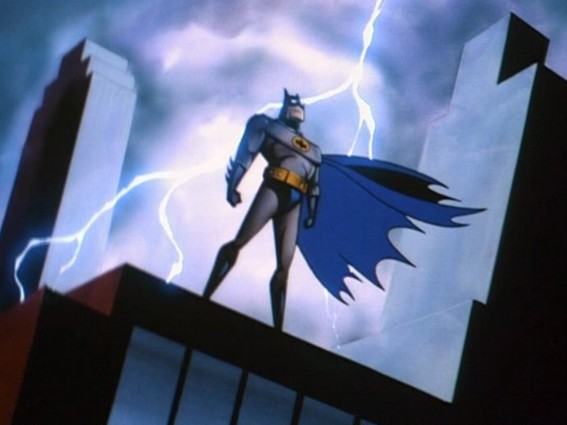
I know I'm not the first Charge-Shot!!! blogger to have played Batman: Arkham Asylum, and I hope I'm not the last... although that may very well be the case, as I could see myself leading my third-person, Kevin Conroy-voiced, statuesque hunk of a Bat through the eerie dilapidated halls of Gotham City's most celebrated/terrifying lunatic asylum until my thumbs stop working. This was my third time through (most of) the game, but my first since actually owning a PS3 on which to play it, and every bit of it was as magical as the first time.

A Riddler puzzle that depends on where you stand
Since I received that aforementioned PS3 as a gift, I've spent pretty much every minute where I was both a) in my apartment and b) conscious totally immersed in the game's world. I completed the story mode with enough style and flair to gain enough XP to unlock all Batman's upgrades before the final boss fight (longer and more varied combos during "Free-Flow" combat sessions earn more experience points, which can be used to purchase cool Bat-gadgets). I'm currently embarking on the quest for 100% completion by finding all the hidden Riddler-themed items on the map and unlocking all the combat/stealth challenges. Then it's on the downloadable content. Which will hopefully hold me over until Arkham City comes out in the fall. Who am I kidding? I'll probably play through the story at least twice more before midsummer...

I don't have much of anything new to say about the game, except to profess my love for it. Andrew summed up the gameplay mechanics in his demo review. It's been well noted in Marginalias of the past how well this game stands up against all previous attempts to game-itize the Caped Crusader. So I'll jump right into a rundown of the game's comic-inspired renditions of our favorite heroes and villains and a discussion of how their gameplay mechanics relate to the underlying social and political themes of the Batman universe.

Continue...

Friday, November 5, 2010

Schwarzenegger v. the EMA – Video Games, the Supreme Court, and Common Sense

supreme-courtOscar Wilde.  Superman.  Twisted Sister.  What do they have in common?  All have at one point in time been the focus of public outcries against perceived obscenity.  With every form of entertainment, it seems, comes a backlash against its worth, an attempt to decry the medium for chipping away at the culture’s morality.  Hell, even Plato hated on theatre.

It shouldn’t be surprising then that video games have been thrust onto the public chopping block.  After years of Grand Theft Autos and Dooms and Calls of Duty, the state of California has simply had enough.  They tried to enact a law (AB 1179) strictly prohibiting the sale of violent video games to minors, a law that would make it a punishable crime for any weekends-only GameStop employee to sell Modern Warfare to some sixteen-year-old with a beard.

The Entertainment Software Association and the Video Software Dealers Association promptly sued the state, claiming that the law violated First Amendment rights.  The law was found to be unconstitutional by both the District Court and the Ninth Circuit Court of Appeals – something about it creating “a content-based regulation of protected speech.” 

Unsatisfied with these rulings, California took its bill to the highest rung of the judicial ladder: the United States Supreme Court.  Thus began the case of Gov. Arnold Schwarzenegger v. the Entertainment Merchants Association.

Continue...

Wednesday, October 27, 2010

Let’s Resurrect Graham Greene To Write the Next “Call of Duty” Game

greene might as well I haven’t played the new Call of Duty game, Black Ops, but I think I get the gist: the preview trailer features not one, but two instances of soldiers crashing through windows on rappelling lines. An unshaven man wearing a red bandana draws his finger across his throat. Bullets are pumped into ski-masked soldiers, who then topple backwards in glorious slow-motion.

Black Ops is the first game in ages to plant its boots in Vietnam. But the war-torn city of Hue, rendered in such spectacularly hellish detail, seems to be little more than a tableau for a by-the-numbers shooter. Perhaps I’m passing judgment prematurely, but how many windows must a commando crash through before I’m allowed to roll my eyes?

Maybe Black Ops will shove my foot so far down my throat I’ll only be able to gurgle “hallelujah.” Until then, I have a modest nomination for someone who can make Call of Duty relevant again: Graham Greene. The man who wrote The Quiet American, one of the smartest novels ever written about modern warfare.

Continue...

Sunday, October 10, 2010

Dispatches From New York Comic Con 2010- Day Two: Long Lines, Heartbreak, and Synergy

I rose bright and early Saturday morning, ready to face the trials and tribulations of another day at New York Comic Con. After a long ride to Midtown Manhattan on the 2 Train, I emerged on 34th Street and made my way to a confounding sight: there were a lot more people this time.

Owing to the fact that most people work/attend school on Fridays and not Saturdays, the Javits Center was packed to the brim with humanity. A line stretched down the block as far as the eye could see. Worthy volunteers corralled and bally-hooed the crowd into some semblance of order and instructed attendees with weekend passes to avoid the colossal line and make their way to the main entrance. Being a credentialed member of the fourth estate, I advanced passed the great unwashed and entered to yet another huge crowd inside.

I was in a bind. I had arrived just in time to catch James Franco and Danny McBride speaking on a panel to promote their upcoming medieval(!) stoner comedy Your Highness in the IGN Theater at 10:30, but I also desperately wanted to visit the Venture Bros. signing event. I figured, with the event beginning at 11:00, the con having been underway for less than an hour, and with so many people still waiting outside to pick up their tickets, I had a pretty good chance to get a good spot in line.

I was very wrong.
Continue...

Wednesday, October 6, 2010

Book Review: Extra Lives: Why Video Games Matter

I don't know what that cube-head thing is, but it scares the shit out of me Tired of chewing over the Great Games As Art Debate? So is Tom Bissell. In Extra Lives: Why Video Games Matter, he skips the grandstanding and gets to the point: he spent 200 hours immersed in the fantasy role-playing world of Oblivion. There’s a reason why.

The jacket blurb sells Extra Lives as an impassioned defense of “this assailed and misunderstood art form.” It’s wrong, thank god – Bissell is too smart to waste his time being defensive. Instead, Extra Lives is a memoir of the gaming life, a personal account of the sound, fury and theory behind an artform that is, in so many ways, still figuring out what it wants to be when it grows up.

Continue...

Sunday, August 8, 2010

Sunday Reading: Lingering in Limbo

Untitled 12f copy_large It’s no secret that I really enjoyed my time with Limbo.  I’ve also really enjoyed hearing other people’s reactions, whether it be critics, developers, or lay folk.  So when a former GameSpot exec and current developer for 2K Games speaks up about the latest indie gem, I listen.  (Once again, those looking for an unspoiled Limbo experience – and you should, if you on playing – should perhaps not read this.)

In a recent post on his blog Truth, Love, and Courage: Games as Stories, Greg Kasavin examines the narrative feedback loop that is Limbo.  Sure, it’s a pretty game.  Sure, its puzzles constantly challenge the player.  But its story is nigh impenetrable, or perhaps nonexistent.  The game’s store description says the boy is on a journey to save his sister in Limbo, but Kasavin wonders “if the creators of the game had much of a part in writing that description.”  Kasavin sees it differently:

“[Limbo] makes you think there's a story, and fills your head with dozens of interesting questions: who am I? where am I? why am I here? what am I looking for? who else is here besides me? am I even alive? The game's presentation is so strong that you in turn play through with the confidence that the authors of the game, and the game itself, must hold the answers.”

He’s ultimately a bit dissatisfied with the game’s narrative restraint.  Some of the most memorable (see: unsettling) imagery comes early, falling away as the puzzles become increasingly complex.    And for Kasavin, it’s the promise of a stronger resolution – or at least a more thorough revisiting of the opening area – that keeps you going.  Games with libraries of boring backstory could learn a thing or two.

Ultimately, Kasavin concludes that the player’s search for narrative, that search for a definitive meaning, neatly parallels the boy’s search for his sister.  It’s most powerful not as a story with a clear beginning, middle, and end, but as a “game about what it feels like to take a wrong turn.”

Continue...

Friday, July 30, 2010

Bringing About Change in the Red Dead West

All stories – all good ones anyway – include some sort of change. A transformation of sorts, brought about by conflict. A world is one way, a character decides it needs to be another way. A girl is betrothed to one man, her admirer decides she’d be better off with him. Even stories in which “nothing happens” must contain some sort of shift, if even just the realization that there’s nothing to be done.

Videogame narratives are no exception, though they generally tread in water no deeper than your ankles. A fantastical land is oppressed/under attack/magically falling apart and a hero/band of heroes/silent protagonist must stop it. The stakes are high, but rarely personal.

Rockstar’s Red Dead Redemption – the surprise smash hit of this summer (though perhaps not too surprising considering it’s from those people what made Grand Theft Auto) – approaches the idea of change thematically. It’s set in the used-to-be-Wild West at the start of the 20th century. Change is coming to the province of New Austin in all shapes and sizes. And a cowboy, a scarred leopard eager to change his spots, arrives on a mission he didn’t choose to take.

What’s remarkable about Red Dead Redemption is not how this cowboy changes New Austin, but how New Austin changes him. (I will warn you that spoilers lie ahead, things I wouldn’t have wanted to know before I’d finished the game myself.)

In Red Dead, you play as former outlaw John Marston, coerced by government agents into finding and eliminating men from his past. Trouble is, John’s not that interested in doing dirty work anymore. He hung up those spurs a while back. As Rob wrote a few weeks ago, Marston – as written, not always as played – is prone to restraint and remorse. Should he find himself desperate enough to loot the body of a fallen foe for some crinkled dollars and a few shotgun shells, he at least has the decency to apologize.

The g-men pushing Marston’s buttons use more than the law for incentive. They’ve taken his family and will not return them until Marston’s mission is complete. But John’s mission is about more than saving his wife and child. He’s fighting to prove that a man can change. That a man can learn from his mistakes and transgressions. That he can build a life over top of the tattered remains of a troubled past. His wife, a rough-and-tumble woman, used to be a lady of the night, and the son she and John share represents their shot at reformation – redemption, as it were.

Marston isn’t the only one struggling with change. The entirety of Red Dead’s world is experiencing the growing pains of progress. Of course, progress is rarely objective. The good people of New Austin strive to eke out an honest existence, raising cattle and harvesting crops, while criminals seek refuge around and among them, bent on dominating the region. Nuevo Paraiso’s freedom fighters overthrow an oppressive (but ordered) regime, only to give power to a man more in love with himself than his country. Government officials drive fancy new automobiles through the bona fide city of Blackwater, a civilized oasis in the spacious Great Plains, mere minutes from snowy, forested mountains crawling with untamed cougars and grizzlies.

It’s not an accident the game was set in 1911. When one talks of the Wild West, rarely does the 20th-century factor into the conversation. 1911 was the year of the monograph, of Pierre Prier’s first non-stop flight from London to Paris, of the first Indy 500. Technological advances invade the land and culture of this fictionalized West, rendered on the beautiful plains with telegraph lines hanging limply from their poles.

Unfortunately for the reactionary folks of Red Dead, this change is inevitable. What can be authored, however, is how one reacts to the change. Marston, in between occasional quips about the sluggish speed of an automobile, would rather be inquiring as to the whereabouts of his family than marveling at the latest locomotive innovations. His change is deeply personal, beholden to the whims of no man – well, perhaps Edgar Ross, the official for whom Marston works.

More so than in any other iteration on the GTA model, Red Dead invited me to share the story with its protagonist, rather than construct two disparate narratives: one where I abide and follow the mission objectives and one where I crash cars and annoy the police. This is in itself a change from previous games in the developer’s vast oeuvre. Red Dead doesn't shy away from the tropes of Rockstar storytelling, but it does add a few wrinkles to keep it feeling fresh.

In line with tradition dating back to the GTA III, you will travel to specific quest-givers (to borrow some MMO jargon), a cutscene will roll, and then your mission will begin. Red Dead isn't content to sequester its story to these cutscenes, however. Many missions will begin with a (sometimes) brief sojourn to the pertinent location, allowing time for characters to converse with one another. Characters will question Marston’s motives, declare their own, and flesh out Red Dead’s world by commenting on the way things were or the way things ought to be.

Marston has a particular view of the way things ought to be. He yearns to reclaim his family and settle down on a small ranch in New Austin – a modest living for a former criminal. After three acts, three large environments, and the defeat of his former mentor, Marston spends Red Dead’s revelatory fourth act doing just what he wanted: herding cattle, eating his wife’s terrible cooking, and attempting to forge a relationship with his sixteen-year-old son, Jack. The tone of the available missions change entirely. Instead of shooting bandits, he clears crows away from his corn silo. Instead of chasing down stolen wagons, he teaches his son how to hunt. By rolling these moments into gameplay, instead of providing yet another cutscene, Rockstar crafts an emotionally resonant chapter that warms your heart until it breaks it.

One man may change – or attempt to – but some won’t. Agent Ross remains as conniving, unpredictable, and dangerous as ever. Unable to let hang the loose string that is John Marston, he besieges the ranch with army cavalry. A showdown ensues. Marston doesn’t make it. When the game relinquishes control back to the player, you now control Jack Marston, a former bookworm of a boy now wearing his father’s mantle. The tragic failure, the fall of an angsty yet normal boy into shortsighted emulation of his father’s past, is all too palpable.

The more things change in Red Dead Redemption, the more things unfortunately stay the same.

Continue...

Friday, July 23, 2010

Limbo - A Boy, A Forest, and Many Many Deaths

LIMBO XBLA Box Art I went into the woods because I wished to live deliberately, to front only the essential facts of life, and see if I could not learn what it had to teach, and not, when I came to die, discover that I had not lived. – Henry David Thoreau

Playdead’s puzzle-platformer Limbo debuted at this year’s Independent Games Festival, taking home awards for “Technical Excellence” and “Excellence in Visual Art.”  Upon playing the game, people went bonkers.  When a game gets this much acclaim early, it’s as if it were developed with an “Attach Hype Here” sign on the back. 

Such is the perpetual quandary of indie titles.  How do you balance your marketing strategy with potential overhyping?  You need people to spread the word about your game, but the last thing anyone wants to do is fail to meet expectations.

Limbo doesn’t just exceed its hype.  It smashes it, chews it up, spits it out, rips it apart, and disembowels it without mercy.

The game is nothing if not spare.  You control a boy who wakes up in the woods.  There’s no heads-up display, no dialogue, no quest text to tell you what to do.  A glance at the game’s description in the Xbox Live Marketplace intimates that the boy’s searching for his sister.  The title suggests he’s searching for her in some sort of dream or afterlife.  All Limbo wants you to know is that the boy’s in the woods and there’s a button for jumping and a button to move objects.

Limbo also wants you to know that the boy will die – often.  Spiders, spikes, deep water, fire: these are just some of the hazards you can look forward to steering the boy around.  The title screen warns that some of the death animations may be disturbing.  There’s no “may be” about it.  I’m still haunted by the time a giant spider wore the boy’s body as a glove.  A gore filter is provided that minimizes some of the shock value, but that undercuts the title’s disquieting nature.  RUNNNNNNN!Much of what sets this game apart from its peers is that pervasive sense of vulnerability.  There’s no character progression.  There are no perks, no power-ups.  Run, use your environment, or perish; these are your only options.  And some perishing is unavoidable.  You can only learn to avoid some traps by discovering them through a grisly death.  However, tight, reliable controls and a munificent checkpoint system nip any “I wish I’d stop dying” frustrations in the bud.  The boy, whose particular sense of momentum and ability to jump feel wholly unique, controls precisely and predictably.  Any time I cried “Boy!” while watching him die yet again, it was not because I was frustrated with how he responded to my commands.  It was because I knew I’d failed him.

Not all of the puzzles, however, focus on the boy’s death.  Some will wrack your brain until its death.  Others may send you crying to forums desperate for some help.  These stumpers are doled out judiciously, slowing the game’s pace whenever it’s in danger of becoming a child-murdering spree.  How a game this small does so much to establish pace and mood floors me. As I said, Limbo is artistically economical, especially in its visual aesthetic.  Despite the game being entirely in silhouette and grayscale, I found myself marveling at elements more commonly hailed in less monochromatic games – for example, the way light pours through cracks in the forest and the flow of water in the caves.  The black, gray, and grayer color palette also removes a certain level of specificity from the boy and his environments.  This serves a dual purpose.  It enables the player to project their own feelings of dread or anxiety onto the boy, whose face is defined only by two white eyes that blink out upon his death, and allows the developers to hide threats in the shadows.  Exploration generally has no place in such a linear game, but the stark visuals beg the player to explore with his or her eyes, to find the path or the solution in the beautiful near-darkness.

You will be doing Limbo a disservice if you do not play with a serious pair of headphones or some form of surround sound.  The ambient soundscape features no music, only audio cues that alert you to changes in tone or incoming danger.  Silence alternates with the sound of the boy walking, which then mingles with the world’s looming background hum.  Never have I been so unnerved by a game in two dimensions, and Limbo’s stomach-rumbling atmosphere played a huge part in that.

Who is that? So it’s an indie puzzle-platformer that fulfill its artistic aspirations, but just what then is its message?, I’m sure you’re wondering.  Playdead’s coy about that.  At its core, Limbo is about solving puzzles and overcoming obstacles to move forward on a quest for companionship.  There’s no effusive text to attach a metaphor to each new mechanic (see Braid).  There’s no text crawl at the beginning or the somber end to summarize the story.  The boy starts in the woods.  He encounters other boys.  He goes into some caves, navigates an industrial complex, and attempts to save himself from certain doom in a variety of other environments, none of which repeat.  And to explain some of the puzzles in greater detail would ruin any potential satisfaction you might derive from solving them.  You will get from Limbo what you’re willing to put in – and then some.

The only issue I have with Limbo is its brevity.  I would love more, but I think that might dilute an otherwise amazing experience.  Just don’t look at $15 price tag as a reason not to purchase Limbo, or I’d like to send you into the woods to be devoured by a giant spider.  I’ve spent more on meals that I forgot ten minutes later.  And I’ll be remembering Limbo – its environments, its loneliness, its danger – for years to come.

Playdead’s Limbo is available for 1200 Microsoft Points ($15) on Xbox Live as part of the Summer of Arcade promotion.  The developer provided Charge Shot!!! with a copy for the purposes of this review.

Continue...

Wednesday, July 14, 2010

Pleading The Fifth, I Submit: Loudmouthed Jerks Are Ruining Gaming Journalism

87631-jim3 If videogames are the redheaded step children of creative art, videogame journalism is even more ostracized.

How did this happen? I’ll blame the internet – the great equalizer that turns every opinionated jerk with a webcam into a critic. Nearly a decade into the viney jungle of Web 2.0, mainstream rags like PC Gamer and Electronic Gaming Monthly now share elbow-room with louder, brasher web-based publications like The Escapist and Destructoid. While both venues are capable of pumping out good content – The Escapist manages to put out good copy of feature length and quality, and Destructoid once hosted Anthony Burch, one of the better games-as-art apologists – they are best known for their resident loudmouths, who, like most assholes on the Internet, are long on bluster and short on substance.

Succumbing to Snark

Before I lay into “Zero Punctuation,” The Escapist’s snarky game review show, I need to give its creator some credit. Ben “Yahtzee” Crowshaw, an English transplant living in Australia, is a smart guy, and an insightful critic. “Zero Punctuation” is so named for his rapid-fire delivery, cramming a review’s worth of critique in observation into a four-minute cartoon-video. The Escapist so loved Croshaw’s first episode, reviews of Fable: The Lost Chapters and a demo for The Darkness, that they whisked him off YouTube and gave him a paycheck.

The beginning episodes offer some of the funniest and sharpest critiques in gaming journalism. His review of Valve’s embarrassment of riches The Orange Box is confident, smart and just cocky enough. His review of Saints Row 2 rightly points out that sandbox games don’t have to resemble Russian novels to be worthwhile. The self-described persona of a “jaded, friendless misanthrope” is clever and endearing – until it verges into smarmy, self-satisfied snobbery.

Take, for example, Crowshaw’s recent review of Splinter Cell: Conviction, a blockheaded military action-adventure that seemed ripe for a good, smart dissection. Crowshaw chooses to slam the absurd 24-esque conspiracy plot at Conviction’s core with ham-fisted political criticism (with a little scat humor on the side:

“Speaking as a foreigner, who the fuck would want to take over the United States? It would be like trying to keep a giant, diseased ape in your apartment that eats money and suffers from life-threatening obesity and constant diarrhea but viciously savages you every time you try to give it free health care.”

Casual political commentary never makes anyone look smarter, and it nearly flounders his review before it’s started. Why would I want to hear the opinion of someone who reduces complex politics to a clumsy poop joke? Unfortunately, potty humor has evolved from garnish to supporting buttress in ZP’s recent episodes, and snark has replaced criticism at center-stage. Crowshaw still makes some good points – get past the dunderheaded U.S.-bashing, and he neatly skewers some of the game’s core mechanics – but he readily falls back on calling the artificial intelligence model an “esteemed professor of pigshit” which, combined with Conviciton’s main character, makes for a “big retard jamboree.”

During a recent episode, I opened a new tab at the two-minute mark to check CNN.com. This is also when I stopped watching Zero Punctuation – the jaded, friendless misanthrope too often relies on old tricks and a chum-bucket of snark that, lately, smells more than a bit rank. When a shock-heavy delivery is your hook, you should worry when people totter away to check the news wires.

Less Than Sterling

Still, Crowshaw has a brain sloshing around in his skull; Destructoid hack Jim Sterling shows no evidence of intelligence or taste. He doesn’t profess to be a gaming journalist, which in no way excuses him – I don’t call myself a plumber, but I’d probably be arrested if I crawled under your house and started screwing with your piping. For his transgressions, Sterling should be similarly punished. He’s the reason I no longer read Destructoid.

The website enjoyed a startling rise in profile since its founding in 2006, thanks in part to a no-holds-barred reporting style that borrows as much from journalism as it does 4Chan. They play it fast and loose, which is okay, really. If you’re comfortable with an unrelated picture of a cat accompanying a news story, you’ll be fine at Destructoid.

While Sterling serves as news editor, his real job is shock-jockery. He gave Assassin’s Creed II, a universally lauded game, a 4.5 for no discernable reason. He gave Deadly Premonition, a universally condemned game, a ten-point-oh (to be fair, one might argue this is the only sensible reaction to a game like Deadly Premonition). The least he could do is be clever and amusing, like Croshaw. Instead, Sterling falls back on stock vulgarities, calling animations “absolute crap,” and graphics “piss-poor.” He seldom elaborates. It’s lazy writing backed by lazy thinking.

I can almost forgive his slapdash style – it’s not always easy writing about bad videogames as a hobby, as Sterling does. But then he inflicts the idiocy of two video shows, “The Videogame Show What I’ve Done” and “The Jimquisition.”

Sample this episode of “What I’ve Done,” in which Sterling attacks art games. He spends most of his time scoffing and flapping his wrist in what I assume he means to be a critique of the artsy-fartsy Sleep is Death-playing highbrow crowd. In his flamboyant sarcasm, he forgets to make anything other than obvious points – yes, indie games can be pretentious and esoteric.

“Video games are supposed to be deep, dark portrays of the human soul laid bare,” he blathers. “And if you don’t understand that, you’ll never be taken seriously by the likes of moi.”

If you want to see a fat, foppish English man barely land easy blows, this is your ticket. As it turns out, Sterling’s archetypical art game, “Peaches,” is a one-frame-per-second MS Paint animation. “Am I everything?” throbs onto the screen – followed, a second later, by “Am I Nothing?”

The game tells you to touch the peach. You touch the peach. Game over. You fail. The game taunts you: “We have subverted your expectations and now you see how clever we’ve been.” Then Sterling treats us to an image of the peach, now sporting a toothy grin, penetrating your character with a giant dick.

There’s simply too much Jim Sterling for Jim Sterling’s own good. He can act like a fatass art critic on a in the privacy of his own hovel. On Destructoid, “The Videogame Show What’ I’ve Done” erodes his credibility as a writer. As if he weren’t doing that already.

His new video series, “The Jimquisition,” tries very, very hard to cement Sterling as the kind of non-PC truth-speaker FOX News claims to host. As it turns out, Jim Sterling trying to be intelligent is just as intellectually vacant as Jim Sterling being a slapstick buffoon.

He goes after “Self-styled videogame journalist Leigh Alexander” for an article she published on Kotaku called “Who Cheers For War?” Uncomfortable seeing copies of Modern Warfare 2 fly off shelves, she dissects the bloodlust that seems to grip the gaming market.

Alexander, one of the smartest critics in gaming journalism and arguably its best writer, was trying to advance something; Sterling can only try to tear it down. Luckily, his intellectual chops aren’t up to the task. As ever, he makes his points bluntly and tactlessly, administering a simplistic yes-no test to viewers: he shows us real footage of a man blowing his brains out.

“Were you disturbed by that footage?” he asks behind mirrored aviators. “If so, congratulations – you have not been desensitized to real violence.” The whistly-strummy background music resumes. Sterling tries to conflate her argument with those of Jack Thompson, a knee-jerk anti-videogame activist. Alexander isn’t moralizing – “How far can we push things before video games like these stop being a way to interact with and process the human experience,” she wrote, “and instead cross a line to where they're trivializing it?” – but Sterling seems invulnerable to that level of nuance.

Incredibly, the post intro says the video deals more with “serious business” than “angry ranting.”

Maybe I’m giving Sterling too much credit. Maybe, like the rest of the shock-jocks, he should just be left by the wayside, talking to himself in the mirror. I just hate to see someone like Leigh Alexander taking flack from a mental midget like Jim Sterling.

Look: I’m feeling a bit uncomfortable in this glass house. I’m no Shakespeare. Lord knows I’ve written some subpar prose in my time, and have been guilty of the same flippancy for which I trash Sterling (see this article condemning Halo, and this article vindicating it). But I don’t get paid a happy dime for what I do, and I when perpetrate my hobby, I try to do so with a modicum of class and effort. When people take the time to read my reviews, I don’t want to waste it with an arbitrary numerical score.

Perhaps if Jim Sterling were a little less Jim Sterling – if he pulled his face out of the trough and tried journalism, for once – he could bring a little credibility to the form at large.

Continue...

Friday, July 2, 2010

The New Multiplayer, Not Just For Fighting Anymore

bear fight “To be” means “To be in competition.” – C.S. Lewis, The Screwtape Letters

Video games have always thrived on competition.  The earliest games, perhaps with one notable exception, were two-player affairs derived from games much older than their technology.  In 1951, Ferranti’s NIMROD computer allowed two people to play games of Nim, references of which date back to at least the 16th century.  Within the next decade, we had various versions of Tic-Tac-Toe, Chess, and table tennis – leading up to groundbreaking titles like Spacewar! and Pong.

You can see the lingering effects of a competition culture even in games now heralded for their impact on solo play.  Super Mario Bros. comes to mind.  While many of us easily recall what it was like to explore the world, find the secrets, and ultimately rescue the princess, rarely do we stop and remember: that game had points.  Theoretically, you would compare your score with your friends, family, etc.  I think we were too busy trying to get past those damn Hammer Brothers.

The Internet, first on the personal computer and later on home consoles, created a whole new way for players to compete.  While John Daleske’s Empire may have been the world’s first multiplayer shooter, it was still networked between local machines.  During the mid-90s web boom, titles like Quake (and its popular mod Team Fortress 2) took Doom’s deathmatch structure online, establishing many of the conventions we now find in multiplayer gaming.  In the decade-and-a-half or so since Quake’s release, multiplayer gaming’s come a long way.  Dedicated servers and services like Xbox Live provide players with millions of ways to exchange a few frags in virtual competition.

But multiplayer gaming isn’t just a sport for non-athletes anymore.  Developers are building upon the competitive infrastructure, giving gamers ways to interact not predicated on competition.  It’s the new multiplayer, and it’s happening now.

Dropping In and Out

Girlfriend Mode.  The term came into vogue following the release of Nintendo’s Super Mario Galaxy.  The Mario franchise, which started with games featuring a two-player option, had long since drawn a line in the sand between it’s single- and multiplayer offerings.  Proper Mario adventures were now exclusively solo experiences; when friends came over, you popped in Mario Kart and Mario Party.

At least, that’s what you were supposed to do.  I know plenty of people – myself included – who first fired up Super Mario 64 in groups.  Eager to steer the popular plumber in 360°, we took turns passing the new controller around, helping each other solve puzzles and locate hidden stars. 

Super Mario Galaxy’s two-player option brought that sense of communal accomplishment back to the series.  At any point, a second player could turn on a Wii remote, point it at the screen, and help (kind of) the person playing.  If the game got too dull (impossible) or too disorienting (quite possible) to watch, the companion could leave with negligible impact on their friend’s game. 

That 2P circle is your (girl)friend helping out.

Nintendo rightfully marketed this as a way to play with younger gamers (younger siblings need no longer suffer the humiliation of being handed an unplugged controller and being asked to believe that they’re actually playing) and with those who consider gaming a benign distraction enjoyed by other people (hence the admittedly reductive term “Girlfriend Mode”). 

The genius aspect of this is the ability of the second player to drop in and out at will without completely wrecking the experience for the main player.  Nintendo neatly rolled this into New Super Mario Bros. Wii with its “bubble” ability, which allowed inexperienced gamers to hop into a protective bubble if a level proved too difficult for them.  Also, some people may not want to play the whole afternoon, but this way they can plop down on the couch for a few minutes without worrying about messing everything up if they need to leave.  Miyamoto and his crew must believe that, if given a low-pressure situation in which to just try it, more people will warm up to gaming.

Nintendo’s drop in/drop out system has helped change how we game on the couch (the popular LEGO games do the same thing just as well), and there are plenty of games doing the same in online play.  The Marvel: Ultimate Alliance series, Borderlands, and the upcoming sequel to Crackdown all feature cooperative campaign play that places no restrictions on the coming and going of players.  This freedom lowers barriers to entry, encouraging more people to try games even if they’re a little late to the party or can’t make it every Tuesday for raid night.

Those Who Shoot Together, Live Together

Co-op shooters are not entirely new, I know.  I played Perfect Dark and Timesplitters in their day.  But the co-op campaigns in those games were rudimentary rehashings of the single-player experience.  Even the more recent Halo and Gears of War titles, which proudly feature cooperative play, do not require it.  Sure, they’re light years ahead of the late-90s fragfests, but they weren’t offering an entirely new experience, just the opportunity for multiple people to have the same experience simultaneously.

However, a growing brood of co-op specific games are making waves in the shooter gene pool.  Valve’s Left 4 Dead series is at the top of the class (though it is not without its detractors).  Left 4 Dead and its sequel are games that simply must be played with other people.  And yet, it’s not a competitive game at heart (though it does have its competitive multiplayer modes).   It has a story.  Ingeniously, Valve took the shooting conventions of its other franchises, poured them into a huge vat with zombies and some slick peripheral storytelling, and mixed into a concoction as yet unseen in gaming.

You never roll alone in Left 4 Dead. You will not survive the zombie hordes in Left 4 Dead by yourself.  In fact, you cannot.  Even if you’re the only human playing, the game gives you three A.I. companions.  This, of course, is not uncommon in gaming.  What is uncommon is how punishing the game can be on any difficulty other than Easy if you do not have other living, thinking beings with which to play. 

Other shooters, knowing that a majority of gamers can and will play online, feature cooperative modes completely separate from the “main” campaign.  Modern Warfare 2, Uncharted 2, and Splinter Cell: Conviction all shipped with unique co-op experiences.  Not every co-op shooter can be a gem, but the effort’s worth it to find the occasional diamond in the rough.

Communication Breakdown

So far I’ve talked about how gaming’s embraced cooperative play beside, if not over, competitive play.  It’s not just the mainstream that’s going this route, however.  Smaller titles are out to turn cooperative gameplay on its head by restricting the flow of its lifeblood: communication.

Action RPGs are a genre as old as gaming.  Before kids in Japan were buying robots for their Nintendo Entertainment Systems, Gary Gygax was running weekly games of Dungeons & Dragons.  They certainly came of age in the Internet era, with loot-driven RPGs like Diablo leading the charge.  Teams of dungeon raiders in World of Warcraft communicate through voice chat, calling for help when their best laid plans go awry.

But what if you couldn’t talk to your teammates?  And what if the only people you encountered on your dungeon crawl were the ghosts of other fallen warriors?  That’s the premise behind last year’s cult PS3 hit Demon’s Souls.  When online, players can inspect bloodstains on the ground to see brief, ghastly reenactments of other player’s gristly deaths, which serve as warnings of upcoming foes and obstacles.  You can also elect to leave written notes for other players to find if you think your blood won’t do the trick.  Rarely do you interact with other players, and if you do, it’s only with their incorporeal revenants.

Journey - What's up there?

Jenova Chen’s upcoming Journey looks to be a game whose world is similarly consumed by silence.  Chen’s the man behind fl0w and Flower, two games that some might contend are barely games at all.  He traffics heavily in ambience and slow, emergent gameplay.  It’s notable that Journey’s his first game to incorporate the use of an actual button (but only one!).  Speaking of Journey at this year’s E3, Chen expressed disinterest in empowerment fantasies, aka gaming’s bread and butter.  He wants players to feel small and powerless, to rekindle a sense of wonder at and perhaps fear of the expansive unknown. 

Journey was apparently inspired, at least in part, by hiking.  The game will be online, and players will occasionally encounter other players wandering through the world.  Their communication will be limited to a sing button.  No voice or text chat.  I can’t imagine you’ll be partying up with people or anything.  Maybe the encounters will just be there to remind you of the nature of your lonesome quest (the details of which are still fuzzy).

These approaches leverage the always-on, constantly connected nature of the Internet to create multiplayer environments that feel like almost the exact opposite.  Barren worlds populated by shades and muted hikers.  I’m digging it already.

A Lifetime In Tandem

Cooperative gameplay is not in competition with competitive gameplay.  It’s simply an alternative.  I take that back.  Cooperative gameplay has the potential to enhance competitive gameplay.  Look no further than class-based shooters like Team Fortress 2 for that.  Gamers are winning and losing, living and dying, succeeding and failing based on their interactions with one another.

In our May interview with Jason Rohrer, he said, “Multiplayer creates these systems that are not just content to be consumed but an activity to engage in potentially for a whole lifetime.”  What better way to spend a lifetime than playing together?

Continue...